Workstation Jib Crane: A Systematic Decision-Making Approach Based on Job Site Conditions
As a workstation-level material handling device, the selection of a jib crane is not merely a matter of comparing technical parameters; it requires systematic decision-making that integrates the workstation environment, operational characteristics, and process requirements. Improper selection often leads to equipment idleness, reduced efficiency, and even safety hazards. This article provides a practical selection logic from three dimensions: mounting configuration, load parameters, and environmental suitability.
Mounting Configuration: Choosing Between Floor-Mounted and Wall-Mounted Types
The mounting configuration is the primary decision in the selection process, as it directly determines whether the equipment is compatible with the existing workstation layout.
Floor-mounted jib cranes are equipped with an independent base and are secured to a concrete floor foundation. They provide a 360° working range. This type is suitable for independent workstations located in the middle of a workshop, away from walls, such as those adjacent to CNC machines, machining centers, or welding stations. Floor-mounted types do not rely on building structures; they can be installed as long as the concrete floor has a compressive strength of at least C20 and a thickness of no less than 200 mm. They offer strong independence and flexible placement.
However, floor-mounted cranes occupy floor space and require adequate load-bearing capacity in the foundation to prevent structural instability caused by an overly long boom. In workshops with multiple workstations arranged in a continuous line, using floor-mounted cranes for every station can significantly encroach on aisle space.
Wall-mounted jib cranes are fixed directly to the building's load-bearing walls or steel structural columns, requiring no floor space. Their working range covers a 180° area. This configuration is well-suited for assembly lines or production lines arranged along walls, freeing up central aisle space in the workshop. It is particularly advantageous along logistics corridors where forklifts or AGVs need frequent passage.
The limitation of wall-mounted cranes is that they impose stringent requirements on the load-bearing capacity of the wall structure. Unreinforced walls cannot support long-term operation. Before installation, the structural strength of the wall must be verified, and structural reinforcement should be carried out if necessary.
Selection criteria: Choose a floor-mounted type for independent workstations, central workshop locations, and multi-directional operation needs. Choose a wall-mounted type for layouts along walls, space-constrained areas, and where floor passageways must be preserved. Both configurations offer comparable performance under the same load capacity; the difference lies in spatial adaptability.
Load Capacity and Boom Length: Based on Actual Operational Needs
Rated load and boom length are the most critical technical parameters of a jib crane. Selection should be based on actual lifting requirements, not on excessive overcapacity—oversizing only increases equipment cost and operational inconvenience.
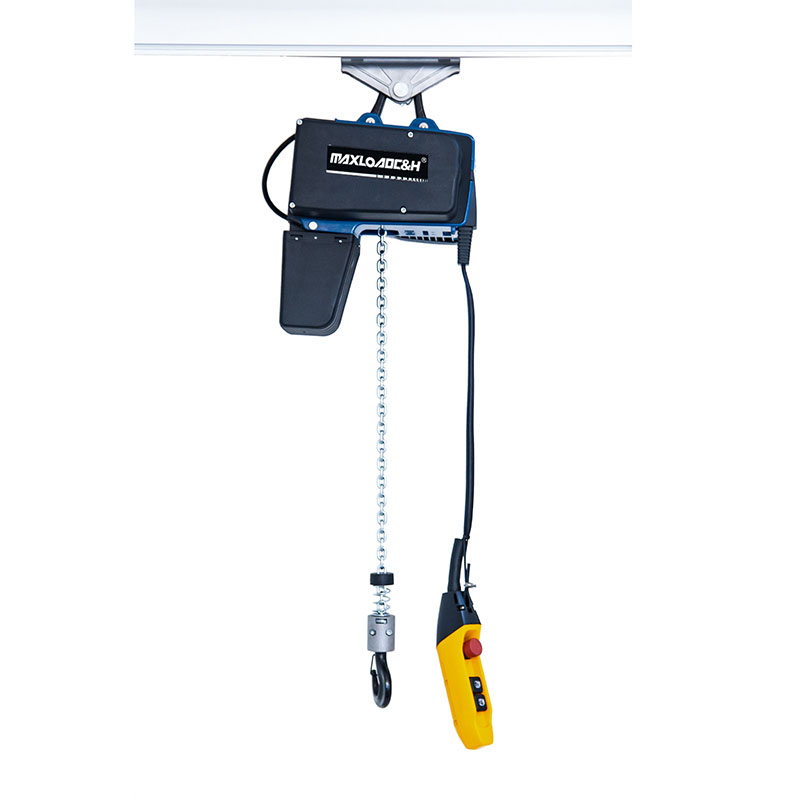
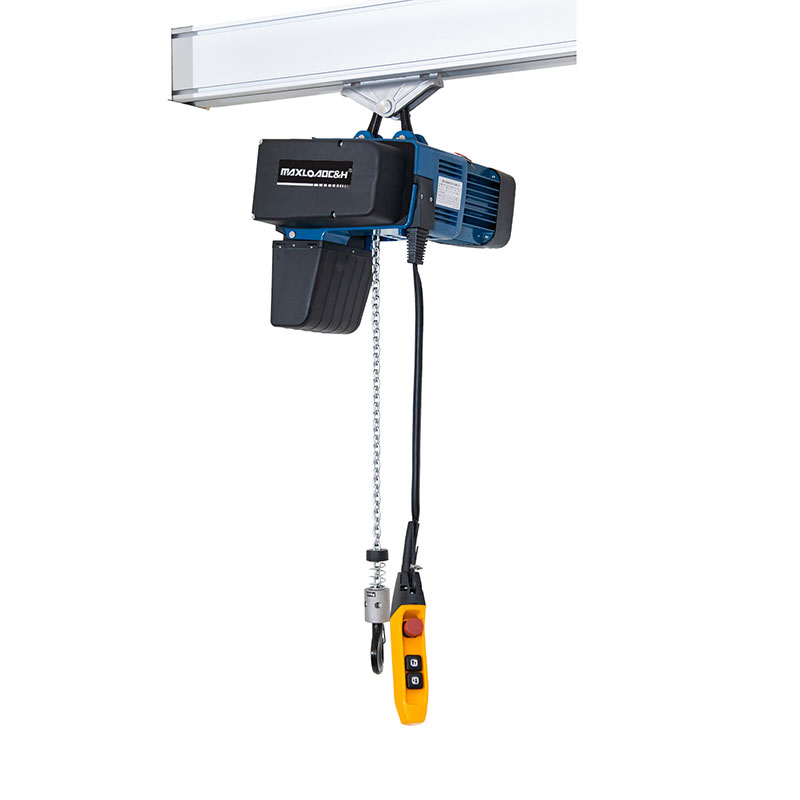
Load capacity selection should be based on the maximum single-piece weight, while also accounting for the weight of the lifting accessory. Common load ratings range from 80 kg to 3 tons. For high-frequency operation scenarios, an electric hoist with wireless remote control is recommended for rapid response. For low-frequency, small-batch applications, a manually rotated unit with a chain hoist is more cost-effective. It is important to note that a higher rated load is not always better—excessive load capacity increases the equipment's deadweight and rotational inertia, impairing operational agility.
Boom length determines the coverage radius and must ensure that the boom tip can reach all operating points within the workstation. However, increasing boom length amplifies deflection at the boom tip. Excessive deflection affects positioning accuracy and handling feel. For jib cranes designed to code, the deflection at the boom tip under rated load should be controlled within ≤1/250 of the span. When selecting boom length, it should be kept as short as possible while still meeting coverage requirements—adequate is sufficient; longer is not beneficial.
Working Environment: Protection Ratings and Special Requirements
The operating environment directly dictates the required protective features of the equipment. Neglecting environmental factors in selection can shorten equipment life or, in severe cases, lead to safety incidents.
Welding stations present challenges primarily from high-temperature weld spatter. Spatter can easily damage motors, wire ropes, and control cables. Additionally, the working space is often complex, and traditional straight-boom cranes have significant blind spots and interference risks. A protective articulated-arm crane is preferred, equipped with removable protective covers to shield against spatter. The articulated arm can flexibly maneuver around obstacles, enabling obstruction-free lifting. With a full protective package, the wire rope replacement interval can be extended from 3 months to 18 months.
Assembly stations require high positioning accuracy to avoid workpiece damage. Floor-mounted or wall-mounted jib cranes with chain electric hoists are preferred for smooth lifting and lowering. Models with stable hoisting and slewing motions should be chosen to prevent vibration from interfering with precision assembly. Measured data show that properly configured jib cranes can achieve workpiece alignment accuracy within ±1.5 mm.
Electronics assembly or cleanroom environments involve small, lightweight precision components and static-sensitive devices. Light-duty articulated-arm or portable jib cranes are more suitable due to their high flexibility and ability to avoid equipment housings. Anti-static design must be considered to prevent electrostatic discharge damage caused by friction or electrical components.
Food processing or corrosive environments demand high standards of hygiene and corrosion resistance. Stainless steel materials must be used for columns and booms; all contact components must comply with food-grade standards. The equipment design should facilitate easy cleaning and eliminate sanitary dead corners.
Explosion-proof environments require explosion-proof design for all electrical components, with the entire unit conforming to the appropriate explosion-proof rating, and regular professional inspection and maintenance must be performed.
Integrated Decision-Making Logic
The three dimensions above can be consolidated into a selection sequence: "Determine the configuration first, then verify parameters, and finally confirm environmental adaptability."
Assess the space: Choose floor-mounted or wall-mounted based on the workstation location.
Determine load and boom length: Set the rated load based on the maximum single-piece weight, define boom length based on the required coverage area, and decide between manual or electric operation based on frequency of use.
Evaluate the environment: Identify any special factors such as high-temperature spatter, corrosion, dust, or explosion risks, and match with appropriate protective features.
Check supporting conditions: Confirm whether the concrete floor strength or wall load-bearing capacity meets installation requirements.
The essence of scientific selection is to make the equipment fit the workstation, not to force the workstation to accommodate the equipment. Following the logic above effectively avoids efficiency losses and safety hazards caused by improper selection, ensuring that the jib crane truly becomes a productivity-enhancing tool rather than an unused fixture on the production line.
 0086 156 1824 5535
 0086 156 1824 5535