Workspace "DNA" Determines Equipment Selection
In industrial production and logistics operations, electric hoists are extremely common material handling devices. When purchasing, many companies tend to fall into the misconception of "rated lifting capacity only"—as long as the tonnage is sufficient, it seems usable. However, in actual use, an electric hoist that is "incompatible" with the workspace environment can, at best, reduce work efficiency, and at worst, create safety hazards or even significantly shorten equipment lifespan.
True equipment selection is essentially a process of "decoding" the workspace environment. Only by comprehensively analyzing dimensions such as the workspace's duty cycle, spatial configuration, power supply conditions, and chemical/physical environment can the most suitable solution be identified. The following six core dimensions provide a professional, practical, and logically rigorous framework for electric hoist selection.
I. Duty Cycle: The "Command Baton" of Equipment Intensity
Electric hoists are not one-size-fits-all tools; their design class must strictly correspond to work intensity. This dimension can be broken down into two levels:
Duty Classification Matching
The overall duty classification of an electric hoist is determined by its "utilization class" and "load spectrum." If your workspace requires frequent operation, a higher-duty-class model should be selected. Such models feature motors, gearboxes, and brakes that are specifically reinforced in terms of heat dissipation, fatigue resistance, and brake service life. Conversely, if the hoist is only used occasionally for equipment maintenance or loading/unloading, a lower duty class will suffice.
Consideration of Duty Cycle Rating
The duty cycle rating directly determines the motor's heat generation and cooling rhythm. Standard mains-frequency hoists are typically suitable for intermittent operation at ED = 25%. If the workspace demands continuous handling, a dedicated model with enhanced heat dissipation must be selected, or dual-speed/variable-frequency control should be considered to reduce heat accumulation during sustained operation and prevent motor burnout due to overheating.
II. Space and Track: The "Hard Constraints" of Structural Selection
The three-dimensional space of the worksite is a "hard boundary" for selection and requires precise measurement and simulation.
Lifting Height and Travel Distance
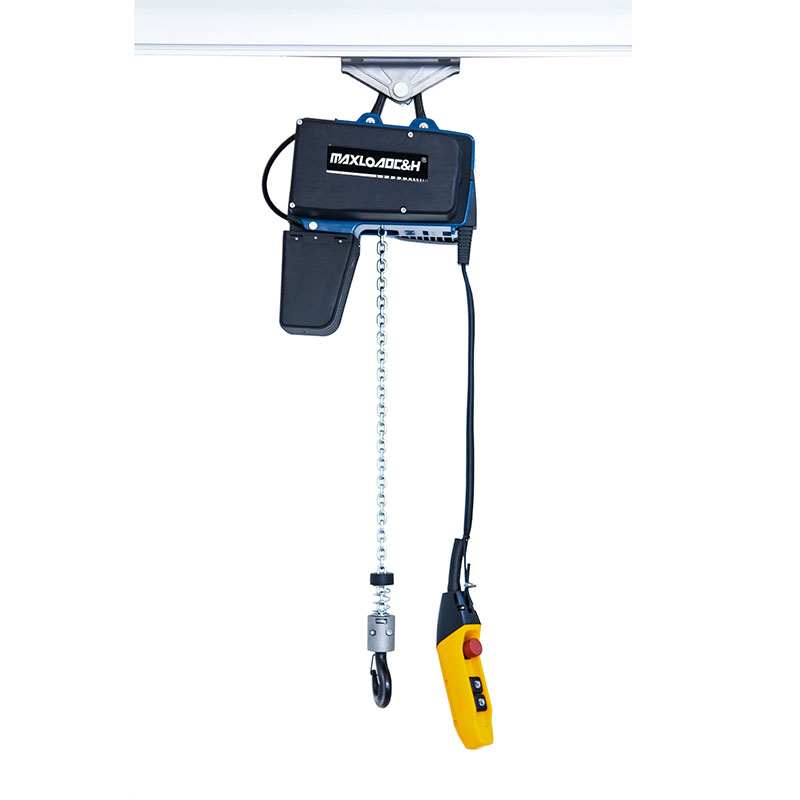
Simply measuring the distance from the floor to the suspension point is insufficient; the height of the spreader itself and the required clearances below must also be considered. If obstacles exist in the workspace, additional "low-headroom" requirements must be calculated—when plant height is limited, a low-headroom electric hoist should be used. By optimizing the parallel layout of the drum and motor, such hoists effectively increase the usable lifting height.
Rail Adaptability
The rail profile of the I-beam must match the travel wheels of the electric hoist. If the rail surface is worn or the specification does not match, the travel wheels may experience flange rubbing or slipping. In addition, turning radius and rail slope directly affect the drive power and wheel load distribution of the travel mechanism. For workspaces with large spans, consideration should also be given to whether the trolley has anti-tilt or horizontal guidance features to eliminate lateral forces on the rail.
End Approach Distance
The minimum distance between the hoist's travel limit switches and the rail end stops determines the farthest edge area that the lifting point can cover. If workpieces frequently need to be lifted near the edges of the workspace, a model with more compact limit dimensions should be chosen to maximize the effective working area.
III. Power Supply and Environment: The "Boundary Conditions" for Safe Operation
The power supply capacity and physical environment of the worksite are prerequisites for reliable electric hoist operation and are among the most overlooked "hidden costs" in selection.
Power Supply and Voltage Drop Verification
Confirm whether the on-site supply voltage matches the motor nameplate rating. If the power supply line is long, the voltage drop during startup must be calculated. Excessive voltage drop can cause insufficient motor starting torque and unstable contactor engagement, which in severe cases may lead to load dropping. In such cases, a motor with a higher power rating or the addition of a voltage stabilizer is required.
A Balanced View of Ambient Temperature
Electric hoists are typically designed for ambient temperatures from -20°C to +40°C. If the workspace is adjacent to heat treatment furnaces, paint drying ovens, or cold storage rooms, the following should be noted:
High-temperature environments: Motors and electrical components must use Class H insulation, and independent cooling fans should be added; gearboxes must be filled with high-temperature-resistant lubricating oil.
Low-temperature environments: The cold brittleness of steel must be considered; critical load-bearing components should be made of materials with good low-temperature impact toughness; additionally, oil heaters must be installed to prevent lubricant from solidifying and causing gear dry-running.
Mandatory Constraints in Explosive and Dusty Environments
In workspaces with flammable gases or vapors, explosion-proof ratings are mandatory regulatory requirements. Based on the hazardous area classification, explosion-proof electric hoists of the corresponding grade must be selected, and all electrical components and friction pairs throughout the hoist must be explosion-proof treated. For high-dust environments, in addition to achieving an IP55 or higher protection rating, special attention should be paid to dust-proof design of the motor fan cover and brake clearance to prevent dust accumulation that could cause brake failure or impaired heat dissipation.
IV. The "Interaction Logic" Between Spreader and Material
The output end of the electric hoist—the hook or spreader—must be highly compatible with material characteristics, as this determines operational safety and efficiency.
Material Geometric Characteristics: For long or bar-shaped materials, a single lifting point can easily cause tilting and slipping; therefore, a dual-lifting-point or equalizing-beam hoist should be selected. For workpieces with sharp edges, protective sleeves or anti-cutting pads should be considered to protect the wire rope.
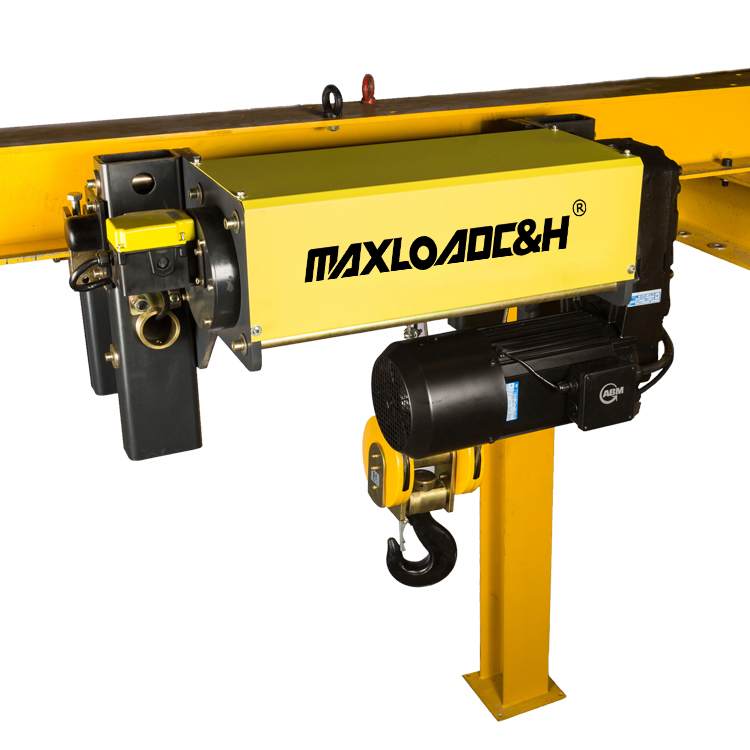
Hook Configuration: Standard hooks are suitable for the vast majority of loose parts. If the workspace requires frequent material turning, a hook block with a swivel bearing can be selected to reduce manual turning effort. For continuous handling scenarios where the hook does not need to be detached, custom C-hooks or flat-lifting clamps can be custom-made to connect directly to the hoist's lifting frame.
Micro-Motion Requirements: If the material consists of precision molds or large glass panels that are highly sensitive to lifting and lowering shocks, a variable-frequency-drive electric hoist must be selected to provide soft start, soft stop, and centimeter-level precision inching control.
V. Control Mode: The "Human-Machine Interface" for Operators
The control method affects not only operational convenience but also the operator's safe positioning and line of sight.
Wired Ground Control: The most economical and reliable method, suitable for fixed workstations with low operation frequency. The key is that the control cable suspension system must be smooth, and the pendant voltage should be safety extra-low voltage, with a self-resetting emergency stop function.
Wireless Remote Control: Suitable for workspaces where the operator needs to move over a wide area or where the line of sight is easily obstructed. When selecting wireless remote control, anti-interference capability and signal latency must be carefully evaluated. In areas where multiple hoists operate simultaneously, the remote controllers must have ID pairing functionality to prevent cross-control. Additionally, an emergency stop mushroom pushbutton must be included to immediately cut off power in any abnormal condition.
Fixed Control Cabin / Console Control: Suitable for large hoists or high-risk, high-temperature workstations. The operator enjoys optimal visibility from a fixed cabin; in this case, the console layout should conform to ergonomic principles, and the joystick movements must correspond to the hook movements to reduce the likelihood of misoperation.
VI. Maintenance Friendliness and Parts Commonality
The final dimension—often overlooked but of great long-term value—is the ease of maintenance after installation.
Replacement Space for Wear Parts: After installation, is there sufficient clearance for disassembling components such as the motor, gearbox, brake, and limit switches? If the hoist is installed tightly against walls or steel beams, replacing brake linings or wire ropes in the future will become extremely difficult, increasing maintenance man-hours and downtime losses.
Principle of Parts Commonality: If a workshop has multiple hoists from different manufacturers, efforts should be made to standardize the specifications of key components during selection. This significantly reduces the variety of spare parts inventory and minimizes equipment downtime caused by missing replacement parts.
Practical Selection Logic Flowchart
To more intuitively grasp the above logic, the selection decision can be divided into three phases:
Data Collection Phase: Establish the extreme operating conditions of the workspace.
Constraint Screening Phase: Based on power supply conditions, spatial dimensions, and explosion-proof ratings, eliminate options that do not meet mandatory safety specifications.
Optimization and Adaptation Phase: Comprehensively evaluate the remaining options in terms of duty class, control mode, and maintainability, and select the model that offers the best balance of overall efficiency and maintenance cost.
Conclusion
Selecting an electric hoist is by no means a matter of simply comparing parameter tables in a catalogue. It is a systematic engineering task that requires comprehensive consideration of both dynamic operational characteristics and static constraints. A successful selection solution should make the operator feel that the equipment is "intuitive and easy to use," allow the hoist to remain "composed" under full load, make maintenance personnel feel that it is "convenient," and give safety managers a clear view of the "boundaries."
It is recommended that companies, before selection, organize a joint "diagnosis" of the workspace environment involving production, equipment, safety, and operations departments, and document all constraints in writing and in data form. Choices made based on real data are the most resilient industrial investments. Remember: the most expensive equipment is not necessarily the most suitable, but equipment that is "perfectly matched" to the workspace environment is always the solution with the lowest total cost.
 0086 156 1824 5535
 0086 156 1824 5535