Don't Let "Making Do" Drag Down Efficiency
If you spend enough time in a workshop, you'll notice a very interesting phenomenon: take the same model of jib crane, place it at Workstation A, and it works like a charm—the operator doesn't feel tired after a full day. Move that same equipment to Workstation B, and it becomes a "white elephant"—either it won't swing smoothly, won't position accurately, or keeps having minor breakdowns. Where does the problem lie? Equipment quality is certainly important, but the more critical factor is that the "workstation environment" variable wasn't fully understood during the selection process.
A jib crane is not a standard off-the-shelf item; it's an auxiliary piece of equipment directly embedded into the production rhythm. Choose correctly, and it becomes the worker's third hand; choose poorly, and it becomes a wall blocking the workflow. Today, let's skip the theory and break down the selection logic for workstation jib cranes from five core dimensions.
Spatial Geometry – Don't Let the Jib Become a "Self-Imposed Cage"
The first thing to consider when selecting a jib crane isn't the lifting capacity—it's the slewing radius and effective clearance. This is the most easily overlooked and fatal mistake.
Many purchasers look at a product brochure, see a slewing radius of 3 meters, and assume it covers a 6-meter diameter around the workstation. But in an actual workshop, have you accounted for the floor space occupied by the column base? Have you considered whether there are material racks, tool cabinets, or fire lanes underneath the jib?
The on-site approach suggests:
Draw circles on the floor with chalk. Before selection, take the top-view drawing of the equipment and mark out the column base, the jib's slewing trajectory, and the hook's extreme positions at a 1:1 scale on the workshop floor. Then, have the operator simulate a normal loading/unloading path. Focus on two things: first, whether the jib, at its maximum slewing angle, will interfere with adjacent workstation equipment or walls; second, whether there are operational blind spots within the minimum slewing radius.
Consider the column mounting method based on your ceiling. If there are load-bearing structural beams above your workstation and the height allows, a ceiling-mounted type is the first choice. Its biggest advantage is a clean floor—no base to trip over, allowing forklifts and pallet jacks to move freely. If the workshop height is limited or if there is interference from an overhead crane, you must opt for a floor-mounted type. But remember, for floor-mounted types, you need to factor in the height of the base protruding from the floor, as well as the foundation load requirements of the anchor bolts. Don't wait until the equipment arrives to realize you need to cut and re-grout the floor, causing a three-day shutdown—this cost far exceeds the equipment itself.
Load Characteristics – Don't Just Look at "How Heavy," Look at "How Big"
"My workstation needs to lift 500 kg, so a 1-ton crane should be fine, right?" This is the biggest misconception in selection. Load weight is a threshold, but not the whole story.
In the lifting equipment field, the rated capacity corresponds to a load curve at a specific radius. That is, if the jib can lift 1 ton at its shortest reach, it doesn't mean it can still lift 1 ton at its fullest extension. This is because the bending moment on the jib increases dramatically with distance.
A professional approach is:
Measure the near and far limits of the lifting path. You need to know how heavy the workpiece is at the hook's nearest point and at its farthest point. If the workpiece at the farthest point weighs only 300 kg, while the one at the nearest point weighs 800 kg, then during selection you should match against the "load-radius curve" in the specification sheet, rather than just staring at the maximum rated value.
Pay special attention to eccentric loads. If your workpiece is a long shaft, an irregular shape, or comes with a fixture, and its center of gravity isn't directly under the hook, this creates an eccentricity. The overturning moment generated by this eccentric load is much greater than that of a vertical load. In such cases, the safety factor should be higher. As a general recommendation, for workstations with impact loads or eccentric loads, the selected rated capacity should be at least 1.5 times the maximum actual load. This isn't waste—it's to handle those instantaneous tugging forces that "strain" the equipment.
Duty Cycle – Is It "Two Lifts a Day" or "Twenty Lifts an Hour"?
For two 500 kg jib cranes, one is used twice a day for lifting molds, while the other runs continuously on a production line with a 3-minute cycle. The mechanical configurations selected for these two scenarios will be vastly different.
This relates to the duty classification in national standards.
Low frequency: Suitable for maintenance, repair, and occasional loading/unloading—such as in equipment repair areas or mold change stations. In such cases, standard configurations for slewing bearings and gearboxes are adequate.
Medium frequency: Suitable for continuous line feeding and machine tool loading/unloading. In these scenarios, the slewing bearing selection should be upgraded to the next size, because frequent start-stop slewing causes geometric wear on the bearing raceways. At the same time, the gear module of the reducer and motor cooling should also be considered.
How to determine this? You don't need to read a book. Go to the shop floor and time it. Count how many complete cycles of "lift-slew-lower-return empty" the jib crane performs in one shift. If it exceeds 150 cycles, be sure to specify the duty class requirement to your supplier. Don't fall for the "it's all about the same" line. After a year, a high-frequency workstation will develop increasing slewing play, and the hook will keep swinging after stopping, making alignment difficult. By then, upgrading will be too late.
Power Source – Pneumatic, Electric, or Manual?
This is a hard constraint imposed by the workstation environment.
Pneumatic jib crane: If your workstation is in a paint shop, grinding shop, or an area with explosion-proof requirements, pneumatic is the only choice. It produces no electrical sparks and naturally meets explosion-proof standards. However, the prerequisite is that your workshop's compressed air piping must be in place, and the airflow must be stable. It's recommended to install an FRL (filter-regulator-lubricator) at the air inlet; otherwise, moisture and impurities in the air will quickly wear down the pneumatic motor vanes.
Electric jib crane: The choice for the vast majority of machining workstations. Here, a distinction must be made between the hoist type and the column-rotation drive type. If your workstation requires precise inching positioning, opt for a hoist motor with variable frequency drive (VFD) to enable slow inching. For general material handling, a standard contactor-controlled motor is sufficient.
Manual/Intelligent Assist: For light loads and applications requiring high flexibility, consider intelligent lifting devices combined with a jib. These sense the operator's applied force direction to drive the load, creating a "floating" operation. However, such equipment has high environmental requirements and is particularly sensitive to dust and heavy oil contamination, which can affect sensor sensitivity.
Human-Machine Collaboration – Finishing Touches Determine Operating Experience
Once the equipment is decided, only 70% of the work is done. The remaining 30% lies in the limit devices and operator interface layout.
Mechanical limit or electronic limit? If your workstation is right next to an aisle, and the jib's slewing angle must be restricted to within 180 degrees without crossing the boundary, you must install mechanical stops or limit switches on the slewing gearbox. While electronic limits are convenient, they are prone to failure in high-vibration workstations; it's recommended to have both mechanical and electronic safeguards.
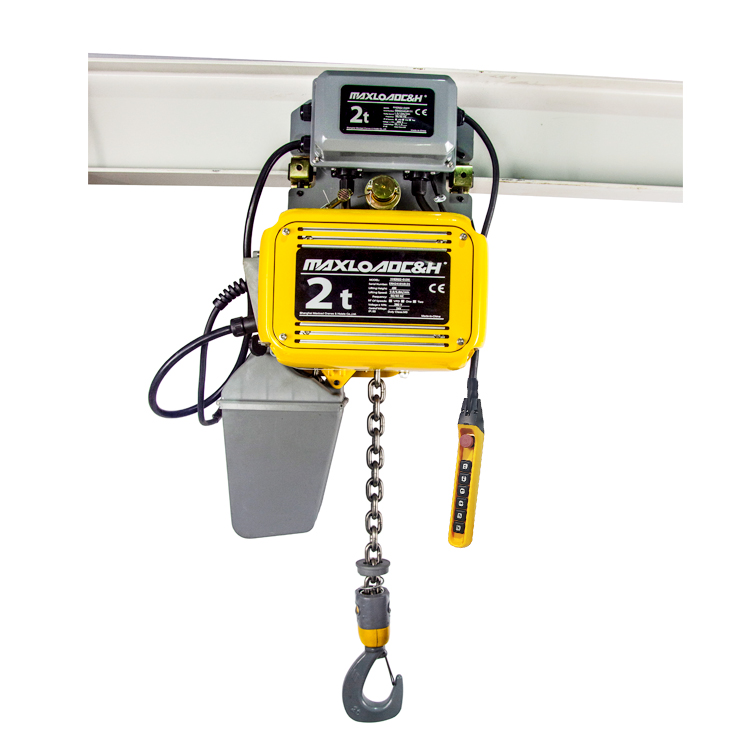
The pendant cord length and hanging points. This is the least noticeable but most common complaint from workers. A cord that's too long drags on the floor and gets run over by forklifts; too short, and it can't reach the farthest lifting point. My suggestion: the pendant cable length should equal 1.2 times the maximum jib radius. Also, install multiple cable hooks along the jib so the cable can extend and retract with the jib, without drooping to the floor.
The final "feet-on-the-ground" mindset. After installation, don't rush into acceptance testing. Take the heaviest workpiece and have the operator run through 10 continuous cycles. Stand beside them and observe: do they have to frequently bend down or look up to see the hook? Are the pendant buttons conveniently placed? Is the emergency stop within easy reach, or is it in a blind spot? These details determine whether this jib crane becomes a "tool" or a "liability."
Finally
Selecting a jib crane is, in essence, not about choosing a piece of equipment, but about re-planning the material flow logic within a specific space. Don't just stare at the specs on the brochure. Take a tape measure and a stopwatch, spend half a day on the shop floor, and get clear answers to these four questions: "How much space is there?" "How does the load move?" "How many times a day is it used?", and "What are the surrounding interferences?" Once these are clear, your selection won't go astray.
One final reminder: jib cranes fall under the category of light-duty lifting equipment in the special equipment directory. Post-installation inspection and regular maintenance are legal requirements. During selection, be sure to consider maintenance convenience—for example, whether the bearing at the top of the column has a pre-drilled grease port, and whether the slewing gearbox has an inspection window. If you tackle these tough points, the jib crane you select will truly be easy for the workers on the floor to use and will keep production running smoothly.
 0086 156 1824 5535
 0086 156 1824 5535