Start with the Environment – Avoid Those Pitfalls
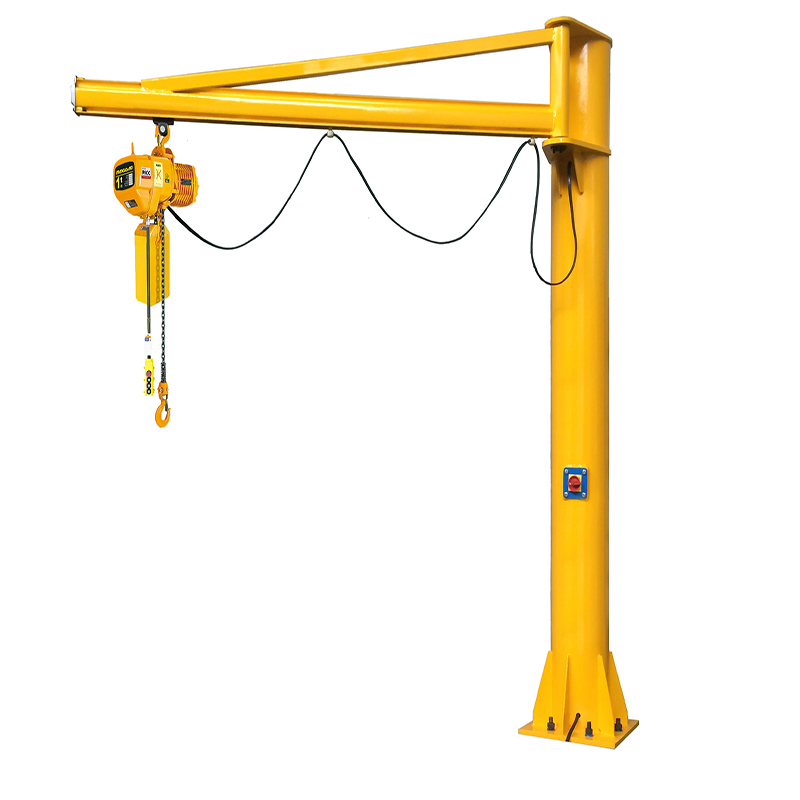
The combination of a jib crane and an electric hoist is very common in factories. But whether a piece of equipment actually works smoothly on the shop floor often depends on whether the workstation environment was thoroughly considered during the selection phase. Many times, we spend a fair amount of money on a new unit, only to find that the boom collides with nearby equipment when swung to a certain position, the operator finds it awkward to use, the hook can't reach the material table, or the hoist develops minor faults frequently. Most of these problems aren't due to poor equipment quality, but rather because several critical on-site details were overlooked during selection.
In this article, we'll break down the selection process from several dimensions of the workstation environment. We'll avoid piling up technical parameters and instead focus on how to assess and make decisions in real-world scenarios.
First, Clearly Define the Area the Boom Needs to Cover
The core value of a jib crane lies in its rotational coverage, but a larger working radius isn't always better. A common misconception is: if the workshop has enough space, choose a longer boom to serve more workstations in the future. However, for every meter the boom extends, the overturning moment on the column and base increases exponentially. This directly drives up the cost of the foundation and column materials, meaning you end up buying a machine that's two sizes larger than what you actually need.
A more pragmatic approach is: plot all the material points, tooling tables, incoming material areas, and finished goods areas that the hook needs to serve on a floor plan. Connect these points with an arc, and you'll have your radius. It's also important to note that the jib crane's rotation angle is just as critical – many people focus only on the radius, not the angle. In some workstations, because they are against a wall or have other equipment nearby, the boom's actual usable rotation range might be only 120 degrees. In this case, if you choose a full-rotation jib crane, you're paying for rotational travel that will never be used. If the rotation angle is indeed limited, consider a restricted-angle jib crane, which only covers the useful arc.
Lift Height and Lifting Travel Are Two Different Things
The electric hoist's lifting height does not equal the effective working height at your workstation. The distance the hook travels from its lowest to its highest position is the lifting travel, but what truly matters to the operator is whether the hook can descend to a height convenient for attaching loads, and whether it can rise high enough to clear obstacles.
An easily overlooked on-site factor is the jib crane's mounting method. With a floor-mounted installation, the column takes up floor space, and the hoist hook will be at a certain distance from the floor at its lowest point. With a wall-mounted installation, the boom's height position is constrained by the wall structure. In both scenarios, with the same hoist lifting travel specification, the actual usable height range is completely different. So, during selection, don't just look at "how many meters is the lifting travel," but ask "does the range from the lowest hook position to the highest hook position cover the critical operating heights in my workstation?"
Also, consider whether there are overhead cranes, fire suppression pipes, or lighting fixtures above the workstation. These will limit the installation height of the jib. If the ceiling clearance is limited, you may need to make a trade-off between installation height and lifting travel – either accept a shorter travel for the hoist or choose a mounting method that allows for a lower installation height.
Load Capacity Isn't Just About Rated Lifting Weight
Many people select a hoist based directly on the maximum workpiece weight. This logic is generally sound, but it overlooks a few practical factors.
First, the weight of the lifting accessories. If your workpiece weighs 50 kg, but the slings or spreader bar weigh 8 kg, the hoist actually needs to lift 58 kg. This is often considered, but what's frequently missed is the dynamic impact load during lifting and lowering. In workstations where operators are less gentle, the impact load at the instant of lifting can reach 1.3 to 1.5 times the static weight. If your workpiece weight is already close to 90% of the hoist's rated capacity, adding the accessory and impact loads means the hoist is effectively operating in an overloaded state for extended periods, significantly shortening its lifespan. A prudent industry practice is to leave a 20%-30% margin on the maximum lifting weight. This isn't to handle occasional overloads, but to accommodate impact loads and the weight of lifting accessories.
Another often overlooked point is load distribution. Some workpieces are irregularly shaped, with their center of gravity not at their geometric center. When lifted, they tilt, causing additional eccentric wear on the hoist's rope guide and wire rope. If your workpieces frequently have this issue, consider selecting a hoist with dual ropes or an anti-tilt function during the selection phase – it's much easier than retrofitting later.
Matching the Duty Classification Is More Important Than the Brand Name
This is where selection often goes wrong, because many people overlook it, focusing only on lifting capacity and price. Both electric hoists and jib cranes have their own duty classifications, which essentially indicate the equipment's design life and load factor level.
Simply put, if a workstation only lifts three to five times a day, for a few minutes each time, an A3-class hoist is perfectly adequate. However, if it's on a production line and lifts every few minutes, continuously throughout the day, you'll need at least an A5 classification or higher. Using a light-duty hoist for heavy-duty, high-frequency tasks will cause mechanical wear to accumulate rapidly, even if you never exceed the rated weight. The wire rope, gearbox, and brake will all fail prematurely.
The same applies to the jib crane itself. How many times does the slewing mechanism rotate each day, and does it rotate under load? These factors affect the selection of the slewing bearing and the geared motor. If you simply tell the supplier "I need a 1-ton jib crane," they might provide a standard configuration, which may not be the most suitable for your workstation. Clearly communicating your working frequency and load factor, and letting the supplier determine the appropriate duty classification based on this, is more important than fixating on the origin of a specific component.
Environmental Factors Dictate Configuration Details
Several specific aspects of the workstation environment directly influence equipment and accessory selection:
Dust and Humidity: If the workstation is in an environment like grinding, foundry, or cement product manufacturing, dust is a persistent problem. Dust can enter the hoist's brake and motor cooling fins, accelerating wear and overheating. In these conditions, prioritize motors with higher protection ratings (IP codes). Also, the hoist's brake should ideally be a sealed type, avoiding the economical open-brake designs where the brake disc is exposed. For particularly humid or corrosive environments, the wire rope and hook materials should also be considered for anti-corrosion treatment.
High-Temperature Environments: If the workstation is near heat treatment furnaces, melting furnaces, or if the workpiece itself is freshly removed from a furnace at high temperature, the hoist's electrical components and wire rope are vulnerable. The lubricant in standard wire ropes will evaporate at high temperatures, increasing wear between the strands. In this case, heat-resistant wire rope is necessary. The motor and control box should also be positioned as far from the heat source as possible, or provided with thermal insulation.
Power Supply Method: Some workstations lack a fixed power outlet nearby, or routing cables along the floor is inconvenient. In such cases, you might consider a power supply via a cable reel or conductor bars (festoon systems). However, conductor bars have requirements for environmental cleanliness and are prone to poor contact in dusty environments. In comparison, a cable reel is simpler in construction and has lower maintenance costs, but its travel length is limited. Each option has its pros and cons.
Operating Space Determines the Control Method
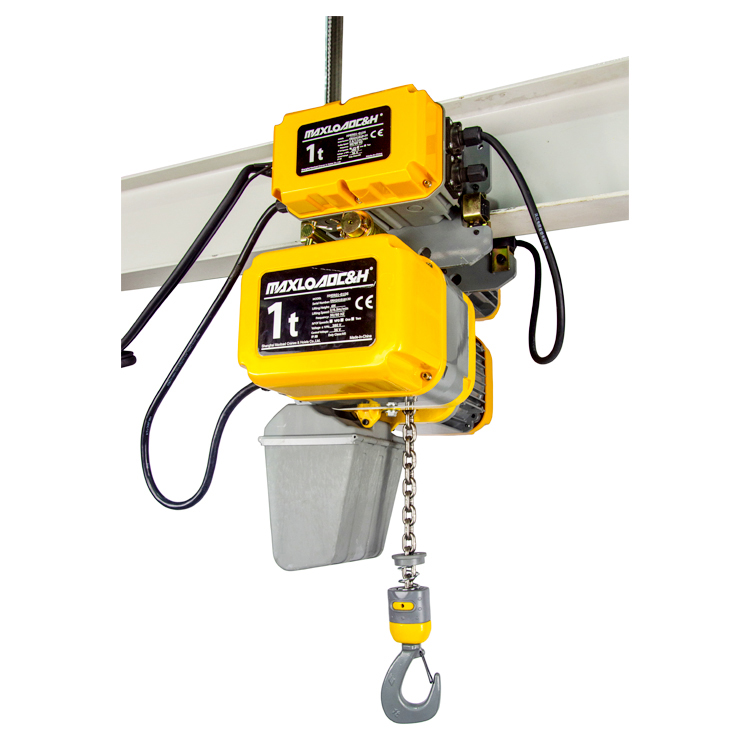
Control methods for jib cranes and hoists mainly fall into three types: pendant control, radio remote control, and cabin control. For workstation-level applications, the choice is basically between pendant and remote control.
Pendant control has a cable tether, requiring the operator to stand right next to the equipment. This means there needs to be a clear line of sight between the control point and the load's landing zone. If the workstation layout is cramped and the operator's standing position is blocked by other equipment, making the hook invisible, they'll have to operate by feel, increasing the risk of swinging and collisions. In such cases, a radio remote control offers more flexibility, allowing the operator to move to a vantage point and even make fine adjustments while observing. However, remote controls are more susceptible to damage in dusty, high-impact environments, and there is a risk of accidental activation. Some workstations address this with remote control units featuring accidental-actuation prevention.
Additionally, the frequency of operation is a factor. If the lifting motion at the workstation is simple – a "lift-slew-lower" cycle – a pendant control is perfectly adequate and lower in cost. If the operation is complex, requiring frequent inching or precise micro-positioning, the flexibility of a remote control becomes more advantageous. In some workstations, due to the specific location of material tables, the operator needs to stand beside the load to align it with mounting holes. In these situations, a remote control is almost essential, as the pendant cable length prevents the operator from reaching the optimal viewing position.
The Installation Foundation Is the Most Easily Overlooked Hard Cost
Jib crane installation basically falls into three types: floor-mounted with a foundation, floor-mounted without a foundation (base-plate mounted), and wall-mounted.
Floor-mounted with a foundation requires excavating a pit, installing anchor bolts, and pouring concrete. This involves breaking ground, restoring the flooring, and avoiding existing underground utilities. If the workshop floor already has an epoxy or hardened aggregate topping, breaking it open and restoring it is costly, and achieving an exact color and texture match is difficult. If the workstation is not on the ground floor but on the second floor or higher, the floor slab's load-bearing capacity is often insufficient to support a floor-mounted jib crane with a foundation. In this case, you must opt for a wall-mounted or base-plate mounted (counterbalanced) design.
A base-plate mounted installation doesn't require digging a foundation; it relies on a counterweight base for stability. However, it has a larger footprint and requires a level floor surface. Wall-mounted installation requires the wall to have sufficient structural strength – ordinary brick walls or lightweight partition walls are insufficient; it must be a concrete wall or a structural steel column.
A recommendation during selection: include the installation method and the associated foundation costs in your budget. The equipment price difference between different installation methods for the same lifting capacity might only be a few thousand Yuan, but the cost difference for the foundation construction work could be several times that amount. Confirm the floor and wall structural information with the site management team in advance; don't wait until the equipment arrives to discover it can't be installed.
Think About Maintenance Convenience in Advance
Once the equipment is installed, whether routine inspections and maintenance are convenient is something rarely considered during selection, but its impact is deeply felt during use.
A key detail is the hoist's mounting position. If the jib crane doesn't have a platform or walkway underneath its boom for maintenance personnel, repairing a hoist issue might require them to use a ladder or stand on the workpiece to access it – which is unsafe and inefficient. If conditions permit during selection, discuss with the supplier the possibility of adding a maintenance platform on the column or mounting points for safety harnesses under the boom.
Another aspect is wire rope inspection and replacement. The hoist's wire rope requires regular inspection and replacement. However, some jib crane designs position the hoist such that its inspection access points face a wall or other equipment, making it impossible to see the rope's condition. If your workstation allows, request during selection that the hoist's mounting orientation be adjusted for accessibility, or choose a hoist design that allows for easier wire rope inspection.
 0086 156 1824 5535
 0086 156 1824 5535