Workstation Cantilever Crane Selection – From Site Assessment to Equipment Installation
Many factories fall into a common pitfall when purchasing cantilever cranes and electric hoists: they start with the specifications and then look for a place to install them. As a result, after installation, either the slewing radius hits a column, the crane is equipped with variable-frequency speed control despite being used for no more than three lifts per day, or the operator has to walk around a pillar just to reach the pendant control. The equipment itself isn't faulty – but when it works against the workspace environment, it becomes a waste.
This article does not list specification tables. Instead, it presents a logical selection process: first assess the environment, then determine the structure, and finally match the hoist. Following this sequence ensures that the selected equipment becomes a tool the workstation can truly put to use.
Diagnosing the "Spatial Character" of the Workstation
The essence of a cantilever crane is to combine "vertical lifting" with "horizontal movement" at a fixed workstation. Therefore, the first data to read is not the lifting capacity, but the distribution of obstacles within the slewing radius.
Measure three things with a tape measure: whether there is any fixed equipment, aisles, or fire hydrants within 2 meters around the column mounting point; the clear height needed between the lowest hook position and the floor; and the horizontal distance from the operator's standing position to the hook's natural resting point.
These three data points directly determine the type of cantilever crane.
If the workstation is close to a wall or column and the working area within the slewing range is only in the forward 180 degrees, a wall‑mounted cantilever crane saves more space than a pillar‑type. The mounting bracket is anchored directly to a load‑bearing column or concrete wall, taking up no floor space. Although the slewing angle is limited, it is perfectly adequate for machine loading/unloading or welding stations arranged along a wall. If the workstation is in the center of the workshop and needs to cover materials or equipment on all sides, then only a pillar‑type crane will do, with a slewing angle of at least 270 degrees, preferably 360 degrees. Note that a 360‑degree pillar‑type cantilever crane requires checking whether the slewing ring's mounting base conflicts with floor embedments. In many factories, the floor is already hardened by the time of retrofitting, making foundation bolts impossible – in that case, a portable or ballasted base must be considered.
Another easily overlooked spatial variable is the difference between the building height and the installation height of the cantilever crane. If the clearance between the bottom edge of the cantilever beam and the purlin is less than 300 mm, the hoist's lifting motor cannot be properly serviced – there isn't enough room to remove the end cover for inspection. This detail rarely appears in selection manuals, but it will certainly cause trouble during on‑site maintenance.
Determining Structural Strength Based on Usage Frequency
There are two mainstream structural directions for cantilever cranes: structural‑steel I-beams and box-section beams. Many people assume box-section beams are always better than I‑beams, but the choice depends on the workstation's intensity of use.
I-beams are lighter in dead weight and lower in cost. They are suitable for applications with no more than 30 lifts per day, and where the single‑lift weight does not exceed 80% of the rated capacity. Examples include mold maintenance stations, small-part assembly lines, and equipment maintenance areas. Their advantage is low running inertia, giving a light and responsive feel when turning the boom by hand. The downside is that the cantilever beam will exhibit noticeable deflection under heavy loads, and frequent use accelerates wear on the slewing bearing.
Box-section beams are welded from two steel plates into a rectangular cross-section, offering high rigidity and good torsional resistance. They are suited for more than 50 lifts per day, loads approaching the rated value, or frequent retrieval at the boom tip. However, they are heavier and require greater effort to slew. If the operator is female or older, prolonged operation of a box‑section cantilever crane can be physically demanding. In that case, either choose an I‑beam design or add power‑assist devices to the slewing mechanism.
To determine which category your workstation falls into, no complex calculations are needed – simply tally the average number of lifts per day and the average single‑lift weight from production logs over one week. Never select equipment based on an "occasional heavy lift" – that will leave the crane oversized for most of its life, and the operating experience will actually be worse.
Matching the Electric Hoist's "Character"
The "boom" handles horizontal movement; the "hoist" handles vertical lifting. The two must work in harmony, or even the best cantilever beam will be useless.
Electric hoist selection involves three hard metrics: lifting capacity, lifting height, and lifting speed. Lifting capacity follows the crane's rated load – that is straightforward. But lifting height is not simply the distance from the floor to the bottom of the cantilever beam; you must also subtract the hook block's own height, the rigging height, and a safety margin. Many factories purchase hoists based on clear building height, only to find that when the hook is fully raised, the load still falls short of clearing the machine guard – forcing them to lower and reposition.
Lifting speed is the most frequently overlooked parameter. The choice between single‑speed and two‑speed hoists should not be based on "whether precise positioning is needed," but on "whether the lifting rhythm synchronizes with upstream/downstream processes." If the workstation serves machine loading/unloading and the machining cycle is 3 minutes – giving the operator ample time for slow handling – single speed is sufficient. If the station is a transfer point between assembly lines, where a lift must be completed every 30 seconds, then the high speed of a two-speed hoist reduces empty‑hook descent time, while the low speed allows fine adjustment when the load approaches the mounting surface – noticeably improving overall cycle time. However, two‑speed hoists have more complex electrical controls and higher maintenance costs later. For applications with fewer than 15 lifts per hour, two-speed is not worth the investment.
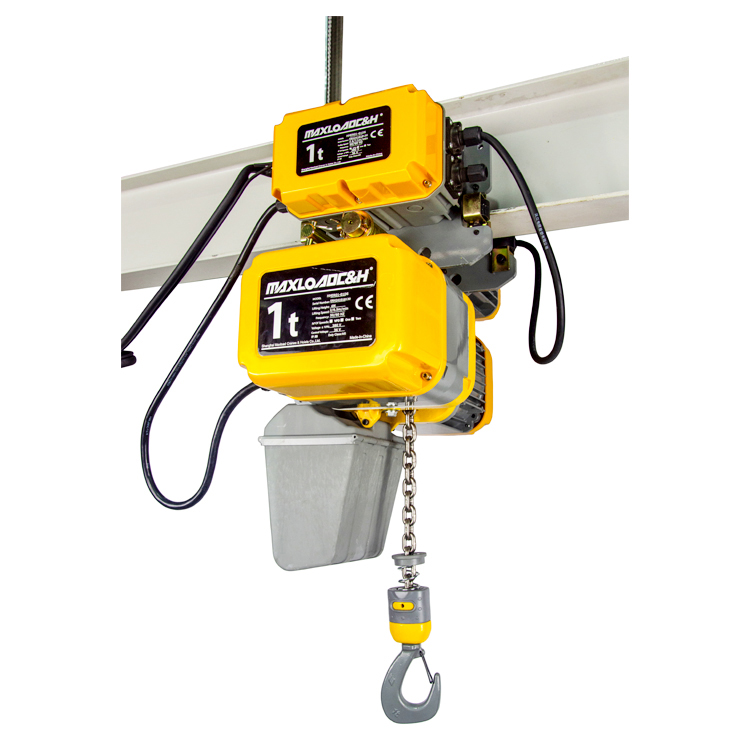
Another critical but often ignored dimension is the hoist's mounting configuration. The vast majority of electric hoists on cantilever cranes are either "fixed" or "low‑headroom" types. Fixed hoists have the hook centerline aligned with the boom rail centerline – simple to install, but they consume part of the lifting height. Low‑headroom hoists have the drum offset to one side of the rail, gaining 200–400 mm of additional lifting height under the same building clearance – a lifesaver for low‑ceiling workshops. The trade‑off is higher cost and more cumbersome maintenance disassembly.
Operational Convenience Determines "Ease of Use"
Equipment is bought for people to use. In many factories, operators prefer forklifts over an installed cantilever crane – and the problem usually comes down to "it's not user‑friendly."
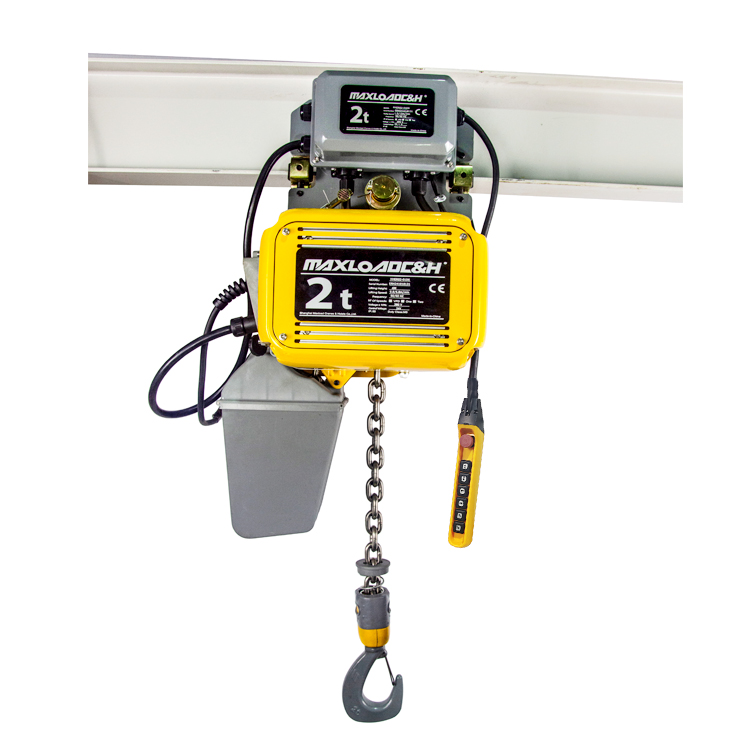
Pendant control placement and cable length are the first details. The pendant should hang naturally directly in front of the operator's standing position. The cable must have enough slack for free movement, but not so long that it drags on the floor and gets pinched by materials. In practice, the most common issue is the pendant cable being chafed against the edge of the cantilever beam during slewing – so a wear‑resistant sheath at the cable exit, or a spring-loaded spiral cord, is essential.
Slewing resistance is the second experiential dimension. The ideal slewing feel is "push it and it turns, let go and it stops" – not "can't push it" nor "let go and it drifts." This depends on the friction coefficient of the slewing bearing and the load magnitude. If the workstation frequently handles off‑center loads, a noticeable tilting moment occurs during slewing, forcing the operator to constantly pull against the offset force – which is extremely tiring. In such cases, the purchase order must specify "eccentric load conditions," so the supplier can make targeted adjustments to the slewing mechanism.
Sightlines are the third dimension. If the boom's slewing axis happens to block the operator's line of sight to the hook, they will have to crane their neck for every positioning move – and after a full day, their cervical spine will suffer. The pillar diameter of a pillar‑type cantilever crane is typically between 200 and 400 mm. If the operator's standing position is directly behind the pillar, the blind spot will cover the hook area. The solution is to define the operator's fixed standing position during the selection phase, align the boom mounting angle to avoid this direction, or opt for an offset‑pillar design.
 0086 156 1824 5535
 0086 156 1824 5535
 kimliu@chnhoist.com