A Selection Guide Based on the Workstation Floor
In factory planning, the combination of a jib crane and an electric hoist is often relegated to the list of auxiliary equipment and given only cursory attention. The result is that the equipment gets installed, but it never feels quite right in use: either the slewing radius can't reach the farthest workstation, or the lifting speed clashes with the production line's takt time. Even more commonly, operators would rather shuttle materials back and forth with a forklift than use that "awkward" jib crane.
Where does the problem lie? It lies in the fact that selectors treat the jib crane as a standard off‑the‑shelf item, when in reality it should be a customized tool that "grows" out of the workstation's physical space, material characteristics, and the operator's working habits.
Look at the floor and overhead – don't rush to the load capacity
Many people start with "I need to lift 1 ton," which is actually a dangerous starting point. The true starting point for jib crane selection is the three-dimensional spatial boundary conditions of the workstation.
First, look overhead. Are there crane runway rails above the workstation? At what height are fire protection pipes routed? Do lighting fixtures fall within the jib's slewing range? These questions directly determine the crane's mounting configuration – whether it should be a floor‑mounted freestanding column, a wall‑mounted bracket, or even a ceiling‑suspended type. The floor‑mounted column is the most flexible, but it requires sufficient floor space for the foundation and no underground cable ducts or pipelines. Wall‑mounting saves floor space, but the wall structure must be able to withstand the overturning moment – this requires structural data, not just "looks sturdy enough."
Now look at the floor. The slewing radius of a jib crane traces a circle on the floor, but there must be no obstructions on that circle. Where does the operator stand to activate the controls? From which direction does the material come, and to which direction does it go? If the jib covers half the workstation but the operator's standing position happens to be in the crane's blind spot, the operator has to walk halfway around the crane for every lift, cutting efficiency in half. The sensible approach is to place the crane's pivot center near the edge of the operator's frequent activity zone, so that the jib's coverage opens out like a fan, covering the material receiving area, the processing area, and the finished‑goods staging area, while the operator's fixed standing position is located near the jib's base – this is both safe and convenient.
Load capacity is not just "good enough" – dynamic forces must be calculated
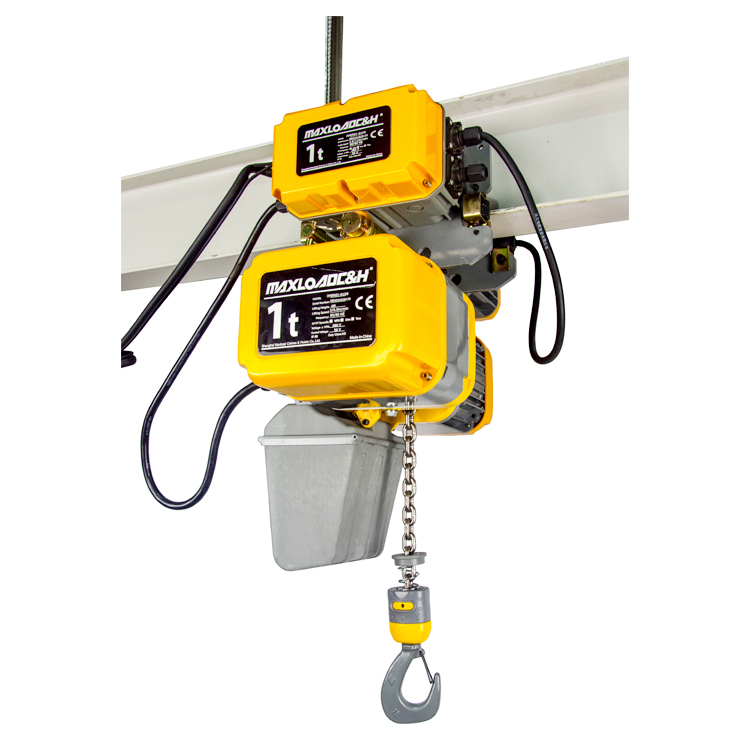
If you oversize the electric hoist's rated capacity, you waste cost and occupy extra space; if you undersize it, it becomes a safety hazard. But "how big" is not determined solely by the workpiece weight – you must also consider the weight of the lifting attachment and the accelerations along the lifting path.
For example, if the workpiece weighs 100 kg but the lifting attachment itself weighs 30 kg, then the hoist must be selected for at least 130 kg – that's the static load. If the operator tends to use rapid jogging for lifting/lowering, or if the jib braking during slewing is abrupt, inertial forces will add on top. The standard practice is to multiply the static load by a duty factor – for frequent start/stop duty, use 1.3; for heavy‑load low‑speed duty, use 1.5. However, a more practical on‑site method is to observe the current rhythm of forklift or manual handling at the station: if the station performs more than 50 lifts per shift, select directly for frequent‑duty class, and increase both the motor insulation class and the duty rating – otherwise the motor's thermal overload protection will trip frequently, and the equipment becomes a decoration.
There is another easily overlooked scenario: eccentric loads. When the workpiece's center of gravity is not directly below the lifting point, the hoist will be subjected to side forces, which over time cause significant damage to the rope guide and drum. If the station handles workpieces with irregular shapes, be sure to consider center-of-gravity adjustment at the lifting-attachment design stage, or request an anti-tilt device when selecting the hoist.
Lifting height and slewing radius – "nominal values" vs. "usable values"
The slewing radius shown in the catalog is the maximum distance the jib can reach, but the effective working radius must subtract the horizontal distance from the hook to the column edge, as well as the lateral space occupied by the lifting attachment. For example: the catalog says the slewing radius is 3 m, the hook is 0.3 m from the column edge, and the attachment occupies another 0.2 m – so the actual reach to the workpiece's center is only 2.5 m. If the workpiece is 1.2 m long and you need to lift it at both ends, the usable radius must be further reduced by half the workpiece length. Many on‑site complaints that "the jib is not long enough" are often not because it was bought too short, but because the calculation was wrong.
The same applies to lifting height. The catalog's lifting height is measured from the floor to the hook's highest position, but the actual usable travel must subtract the height of the attachment's lowest working position. If the workpiece must be picked up from a floor pallet, with a pallet height of 150 mm and a workpiece height of 500 mm, and the attachment needs to descend below the pallet surface to rig the sling, then the hoist's lifting travel must be at least 600 mm more than the theoretical value.
Control method and logic – directly affect whether operators "want to use it" or "can't be bothered"
Many jib cranes come with standard cable‑ or radio‑pendant controls, but workstation environments vary enormously. A clean assembly shop may find radio pendants very convenient, but in a welding shop with heavy dust, the pendant buttons may fail within three days – a weather‑resistant cable‑pendant with a protective cover is a better choice. In high‑temperature or strong‑magnetic‑field environments, electronic components are prone to failure, so mechanical limit switches and pure contactor controls are more reliable than variable‑frequency drives – advanced technology does not always mean suitable for the site.
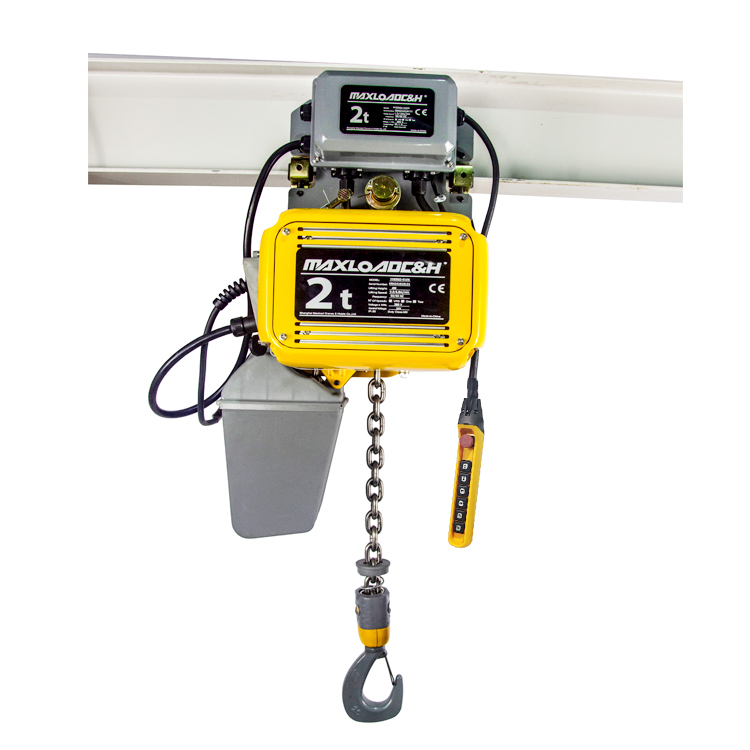
A more advanced consideration is matching the control logic to the workstation's takt time. If this station requires a lift every 5 minutes, then variable‑frequency speed control is necessary, because smooth speed switching reduces load swing and improves positioning efficiency. But if it is used only two or three times a day, fixed‑speed lifting is sufficient, and the extra cost of a VFD is completely unnecessary. In addition, the sensitivity of the jogging response directly affects operator fatigue – too slow a response, and the hook swings around without positioning; too fast, and a slight touch sends it jerking, forcing the operator to constantly tap‑brake. A good practice is to have the operator test the crane on‑site during the commissioning phase, adjust the jog speed curves for both lifting and slewing, and fine‑tune them to the point where it feels like "the crane responds to the operator's fingertips."
Structural selection of the jib itself – not "the thicker, the better"
The jib boom's structural form mainly comes in two types: I‑beam and box‑girder. I‑beams are lighter, cost less, and are suitable for light and medium loads, but their stiffness is limited, and when the jib is long, the end deflection becomes noticeable. Box‑girders offer better rigidity and torsional resistance, making them suitable for heavy loads or jibs longer than 4 m, but they are heavier and impose higher demands on the column and foundation.
When selecting, you cannot just look at whether it can "hold the weight" – you must look at deflection. If the jib's end deflection under full load exceeds a certain value, the operator will find it very difficult to push the hoist along the boom, because the rail will have a slope, and the hoist must overcome climbing resistance. The standard allowable deflection is generally 1/400 of the jib length, but field experience shows that if operators must push the hoist frequently along the jib every day, the deflection should preferably be kept within 1/600 – otherwise, pushing becomes tiring, and workers will use brute force, eventually causing accelerated rail wear, wheel flange rubbing, and a greatly reduced equipment lifespan.
Safety margins and maintenance convenience – easily overlooked "hidden costs"
Safety components on the jib crane – limit switches, overload limiters, wire‑rope guides – should be checked during selection for interface commonality. Some equipment uses proprietary non‑standard parts, and when they fail, you can only wait for the manufacturer to ship replacements – one day of downtime can cost far more than the part itself. During selection, proactively asking "Is this wire‑rope specification readily available on the market?" and "Is the limit switch a standard part?" can save a significant amount of time and money in later maintenance.
In addition, the slewing bearing on the column is the core component of the jib crane. If the workstation environment is dusty or humid, opt for a bearing with a sealing ring and reserve a lubrication channel during installation. Once the slewing bearing wears and develops clearance, the jib will "nod," causing the workpiece to swing severely during lifting and making positioning extremely difficult – and this problem worsens over time until the entire assembly must be replaced.
Finally
The combination of a jib crane and an electric hoist is, in essence, a transformation of material movement from manual physical labor into mechanical motion. The core logic of selection is not a numbers game on a parameter comparison table, but a deep understanding of the workstation as a "micro‑environment."
A well-selected jib crane should make the operator barely notice its presence – it goes where you want it to go smoothly, stops firmly when you want it to stop, and it's only at the end of the day that you remember, "Oh, I used that crane today." A poorly selected piece of equipment, on the other hand, will be complained about every day, or even left unused, becoming an annoying hunk of iron in the corner of the workshop.
So, don't flip through product catalogs poring over parameters. Instead, grab a tape measure and a stopwatch, go stand at the workstation for half an hour, and observe how materials come in, how they move out, and how people move around. Write down every real constraint at the site – and only then go match the equipment. That is the most effective and least "cookie‑cutter" selection method there is.
 0086 156 1824 5535
 0086 156 1824 5535
 kimliu@chnhoist.com