Workstation Environment Determines Selection
In the field of industrial material handling, the selection of electric hoists is often regarded as a simple parameter-matching task—determine the tonnage, lifting height, and then place an order. However, inefficiency, frequent failures, and even safety hazards that arise in actual use often stem not from the quality of the equipment itself, but from misjudgments about the workstation environment during the selection stage.
Different workstation environments impose fundamentally different requirements on lifting equipment. This article focuses on three mainstream types—chain electric hoists, wire rope electric hoists, and explosion-proof electric hoists—and systematically sorts out the selection logic from three dimensions: workstation space, operating frequency, and environmental conditions.
I. Workstation Space: An Overlooked Key Constraint
Workstation space is the first threshold in selection, yet it is also the most easily underestimated factor. For the same 5-ton lifting requirement, the applicable equipment type may be completely different when installed in a standard factory building with sufficient floor height versus a renovated workstation in an old workshop.
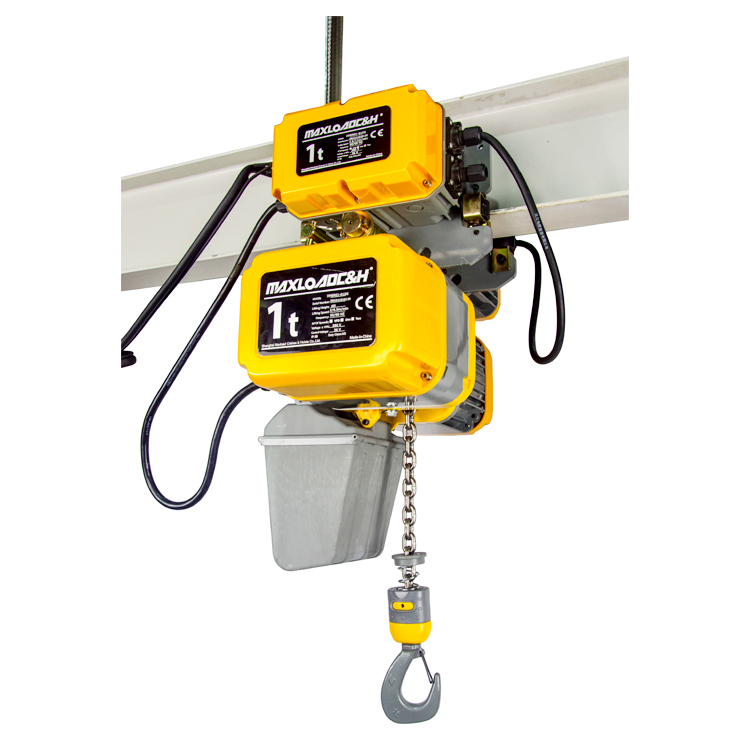
Clear height directly determines the feasibility of the hoist type. Wire rope electric hoists use a drum to wind and unwind the wire rope. The drum has a relatively large axial dimension and requires more upper space. In contrast, the sprocket structure of a chain electric hoist is more compact, and the chain hangs vertically from the sprocket, significantly reducing the requirement for upper space. In low-clearance workstations, chain hoists are often the more pragmatic choice, effectively utilizing limited vertical space and avoiding the awkward situation of "the equipment is installed, but the hook cannot reach the ground."
Workstation configuration also affects the selection decision. The difference between straight tracks and circular tracks is not only reflected in track layout, but also directly affects the design of the hoist's travel mechanism. For workstations that need to operate along curved tracks, the minimum turning radius of chain electric hoists is usually better than that of wire rope hoists. Taking the 1-ton specification as an example, the turning radius of a wire rope hoist may reach 1.5 meters, while that of a chain hoist can be controlled within 0.8 meters. This means that in workstations such as mold manufacturing and assembly line transfer that require frequent turning, chain hoists have better passability.
The installation method is also part of the space consideration. Whether the workstation uses a fixed support, is suspended below an I-beam track, or needs to be used in conjunction with a single-girder crane will all affect the structural selection of the hoist. Some workstations may require specially designed low-clearance models. By optimizing the structural layout, such models can reduce vertical occupied space by 200 to 500 millimeters compared with ordinary hoists.
II. Operating Frequency and Working Class: Matching Real Working Conditions
Working class is the concept most easily oversimplified in electric hoist selection. Many purchasing decisions focus only on tonnage while ignoring the decisive impact of working class on equipment life and reliability.
The working class of electric hoists is usually expressed as M3 to M6, corresponding to different usage frequencies and load conditions. M3 is suitable for intermittent operations, such as scenarios with no more than 50 lifts per day; M5 is suitable for medium-intensity operations and can handle 50 to 100 lifts per day. If the actual operating frequency of the workstation far exceeds the design class of the equipment, problems may not appear in the short term, but long-term high-load operation will accelerate component wear and increase the risk of failure and downtime.
Operating frequency is also related to the choice of hoist type. Chain electric hoists perform well under working conditions involving frequent starts and stops and low-speed precise positioning, making them suitable for loading and unloading workstations on assembly lines and assembly workstations requiring precise alignment. Their sprocket transmission structure responds directly during inching operations, making hook displacement easy to control. Wire rope electric hoists have more advantages under working conditions with large lifting capacity and relatively high lifting speeds, making them suitable for rapid transfer of heavy materials. Speed configuration also needs to match the workstation cycle. Single-speed models are suitable for conventional lifting with low positioning accuracy requirements, offering high cost performance and simple maintenance. If the workstation involves operations requiring slow positioning, such as precision workpiece installation and mold closing, dual-speed or variable-frequency speed control models can provide a smoother low-speed gear and avoid workpiece collision caused by hook swaying.
III. Environmental Conditions: Differentiated Requirements for Ordinary, Damp, and Explosive Locations
The impact of the workstation environment on hoist selection is often fully recognized only after the equipment is put into use. Ordinary indoor workshops, damp and dusty casting workshops, and chemical workstations with flammable and explosive gases have fundamentally different requirements for equipment.
Selection for conventional indoor environments is relatively flexible. In dry workshops, free of corrosive media, and at moderate temperatures, ordinary chain or wire rope electric hoists can both perform the task. At this point, the focus of selection returns to matching tonnage, space, and frequency.
Damp, dusty, or mildly corrosive environments require attention to the equipment's protective capability. The chains of chain hoists are usually carburized and quenched, with high surface hardness and better wear resistance and corrosion resistance than wire ropes. Wire ropes are prone to rusting in damp environments and need regular application of anti-rust grease. Once broken wires or flattening occur, the entire rope usually needs to be replaced, resulting in higher maintenance costs. In dusty environments, the chain structure of chain hoists is relatively less likely to accumulate dust, making cleaning and maintenance more convenient.
Explosive gas or dust environments are the most stringent scenarios in selection. Such workstations must use explosion-proof electric hoists, whose core design principle is to eliminate all factors that could ignite explosive mixtures.
The selection of explosion-proof hoists requires confirming the specific explosion-proof rating. According to national standards, explosive gas environments are divided into Zone 0, Zone 1, and Zone 2. Zone 0 is a location where explosive gas is present continuously or for long periods; Zone 1 is a location where it may occur during normal operation; and Zone 2 is a location where it occurs only occasionally and for short periods under abnormal conditions. Explosion-proof electric hoists are generally suitable for Zone 1 and Zone 2, but not for Zone 0. Equipment explosion-proof markings such as ExdIIBT4 or ExdIICT4, in which IIB and IIC represent the applicable gas level, and T4 indicates that the allowable maximum surface temperature is \(135^{\circ}C\). During selection, it is necessary to confirm whether the hoist's explosion-proof rating matches the type of hazardous gas actually present at the workstation.
Explosion-proof hoists also have special requirements for use and maintenance. Exposed moving parts of the equipment need to use non-sparking materials, operating speed needs to be limited to avoid dangerous temperatures caused by friction and impact, and wire ropes or chains need to maintain reliable lubrication. These details may only be maintenance recommendations on ordinary hoists, but in explosion-proof scenarios they are directly related to safety.
IV. Practical Path for Selection Decisions
Integrating the above dimensions can form a pragmatic selection process.
Confirm the basic parameters of the workstation. This includes the maximum weight of the lifted object, the required lifting height, and the power supply conditions at the workstation. For tonnage selection, it is recommended to reserve a safety margin. Under conventional working conditions, it can be considered as 1.25 times the maximum lifted weight; for frequent operations or working conditions with large vibration, it can be increased to 1.5 times.
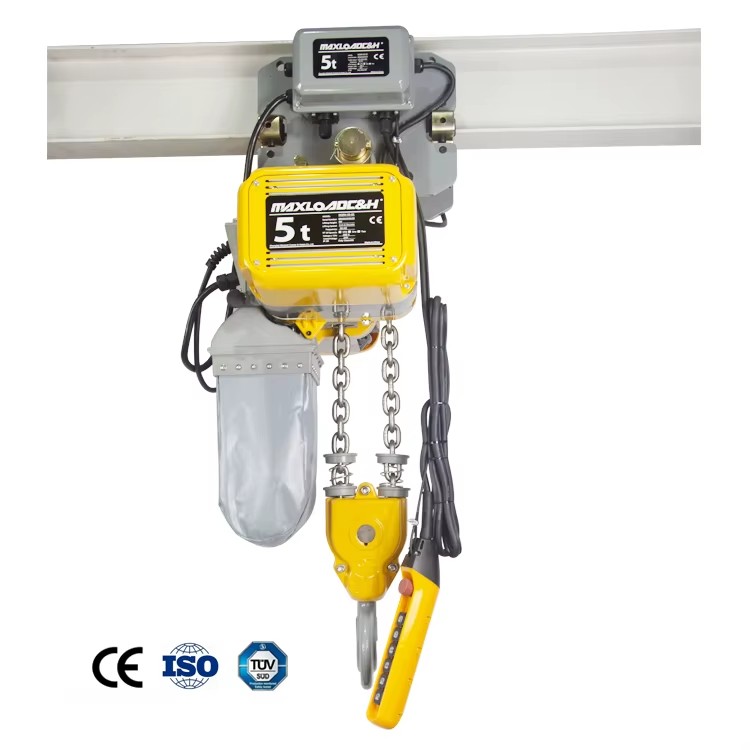
Evaluate the workstation space conditions. Measure the clear height, track layout form, and installation method restrictions. For low-clearance or space-constrained workstations, give priority to chain hoists; for workstations with sufficient floor height and large lifting height requirements, wire rope hoists can be selected.
Analyze operating frequency and precision requirements. Count the number of lifts per day, whether precise positioning is required, and whether there are special requirements for lifting speed. High-frequency, high-precision workstations are suitable for chain hoists equipped with dual-speed or variable-frequency models; low-frequency, large-tonnage workstations can use single-speed wire rope hoist models.
Confirm environmental particularities. Determine whether the workstation is an explosive hazardous location and whether there are damp, dusty, or corrosive media. Explosive environments must use explosion-proof hoists with the corresponding explosion-proof rating, and it must be confirmed that the explosion-proof marking matches the hazardous area of the workstation.
Comprehensively weigh initial investment and long-term costs. The initial purchase cost of chain hoists in small and medium tonnages is usually lower than that of wire rope hoists, and chain replacement costs are lower. Wire rope hoists are more economical under large-tonnage working conditions. Due to special design and certification requirements, the purchase cost of explosion-proof hoists is significantly higher than that of ordinary models, but in hazardous locations this is an indispensable safety investment.
Conclusion
The selection of electric hoists is not a simple product comparison, but a systematic match between the workstation environment and equipment characteristics. Chain hoists, wire rope hoists, and explosion-proof hoists each have their applicable working condition boundaries. Discussing "which is better" apart from specific workstation conditions is meaningless. Only by understanding the three core dimensions of space constraints, operating frequency, and environmental requirements can one make a selection decision that both meets current needs and withstands long-term verification.
 0086 156 1824 5535
 0086 156 1824 5535
 kimliu@chnhoist.com