How to Select the Right Jib Crane Based on the Workstation Environment
Selecting a jib crane is essentially not about choosing a piece of equipment, but about choosing a handling solution that matches the workstation space, material flow method, and operating rhythm. In the same workshop, different workstations may have completely different requirements for jib cranes: a loading and unloading workstation beside a machine tool values precise positioning and minimal intrusion into space, while a material transfer workstation beside an assembly line values coverage range and continuity of operation. The logic of selection should start from the workstation environment itself, not from the equipment parameter table.
Determine the Space Constraints of the Workstation
The first constraint of the workstation environment comes from space. The installation method of a jib crane directly determines how it occupies the workstation space, and this step should often be clarified before parameter calculations.
If the workstation is located in an open area with no wall or column nearby to serve as support, then a pillar-mounted jib crane is the only feasible option. A pillar-mounted jib crane is fixed to the concrete floor with anchor bolts, and the jib rotates around the pillar, covering a working area centered on the pillar. Its advantage lies in independence—it does not rely on the building structure, and its installation position can be flexibly arranged according to the material flow path. But the cost is also obvious: the pillar itself occupies part of the floor space and creates a blind spot at its base that cannot be covered. For workstations requiring 360-degree omnidirectional coverage, a pillar-mounted type is reasonable; but if the workstation is close to a wall or a cluster of equipment, the blind spot of the pillar may fall exactly where the operator most needs coverage.
If the workstation is close to a load-bearing wall or steel structure column and does not require omnidirectional rotation, a wall-mounted jib crane can eliminate the floor pillar and fix the jib directly to the wall. The advantage of this method is that it frees up floor space, making it especially suitable for workstations with narrow passages. But its limitations are equally rigid: the rotation angle is usually limited to between 180 degrees and 200 degrees, and there are hard requirements for the load-bearing capacity of the wall or column—not all factory structures are suitable for installation. In addition, the installation height of a wall-mounted jib crane is fixed, and once the workstation layout is adjusted, the relocation cost is much higher than that of a pillar-mounted type.
If the workstation space is irregular, with equipment obstruction or the need to work around obstacles, then an articulated jib crane should be considered. The articulated type uses a two-section jib structure with two hinge points. The first section of the arm can rotate around the pillar, and the second section can bend further relative to the first, thereby bypassing machine tools, columns, or other fixed obstacles and delivering the hook to positions that a conventional single-arm jib crane cannot reach. The cost is a more complex structure, higher price and installation and commissioning difficulty at the same tonnage, and the hinged structure of the articulated arm itself limits its lifting capacity—articulated jib cranes are usually not suitable for large-tonnage applications.
Determine the Coverage Range and Effective Lifting Height
Jib length and working radius are the parameters most easily overlooked in the workstation environment. The longer the jib, the larger the coverage radius, but the load-bearing capacity at the end of the jib decreases as the radius increases. A jib crane that can lift 2 tons at a radius of 3 meters may have an actual safe lifting capacity at a radius of 5 meters that drops to less than 1 ton. During selection, it must be ensured that the lifting capacity corresponding to the farthest operating point of the workstation still meets the requirement, rather than merely looking at the rated lifting capacity on the jib crane nameplate.
The effective lifting height also needs to be calculated based on the actual conditions of the workstation. Lifting height refers to the vertical distance from the ground to the highest position of the hook. The actual requirement of the workstation should be calculated by superimposing three dimensions: the maximum lifting height of the material, the height loss of the rigging, and the ergonomic margin for the operator when picking up and placing materials. If the workstation needs to lift materials above the machine tool table or assembly line conveyor, the lifting height must cover these heights plus a safety margin. The lifting height of a pillar-mounted jib crane is usually higher, reaching more than 3 meters or even higher; the wall-mounted type is limited by the installation height, and its effective lifting height is often lower than that of the pillar-mounted type.
A detail that is easily overlooked is whether the slewing angle is sufficient to cover the material's round-trip path at the workstation. A pillar-mounted type can achieve 360-degree rotation, making it suitable for workstations where materials need to flow among multiple points within a circular range. A wall-mounted type usually has only about a 180-degree slewing range, making it suitable for scenarios where materials move within a semicircular area in front of the wall. If the workstation actually needs to pick up material from one side and rotate it to the other side for processing, the angle limitation of the wall-mounted type may be exactly on the critical path.
Match the Duty Class and Operating Frequency
Duty class is the most specialized and most easily blurred concept in jib crane selection. Many users confuse "lifting capacity" with "duty class," but in fact the two reflect completely different dimensions. Lifting capacity determines "how heavy it can lift," while duty class determines "how frequently it can lift." Duty class is jointly determined by two factors: utilization level and load state. A 1-ton jib crane used for occasional maintenance lifting and a 1-ton jib crane used for continuous lifting every two minutes on an assembly line have the same rated lifting capacity, but completely different duty classes, and the latter's structural components, motors, and bearings must all be of higher specifications.
For workstation-level applications, a rough judgment can be made: if the lifting frequency is less than several times per hour and the load is usually far below the rated value, a duty class in the A1 to A3 range is reasonable. If the workstation is part of a production line, the lifting action is tied to the production takt, the load is close to the rated value, and the cycle is frequent, then A4 or a higher class should be required. If the duty class is selected too low, the equipment may not show problems in the short term, but under long-term high-frequency use, structural fatigue and mechanism wear will accelerate significantly.
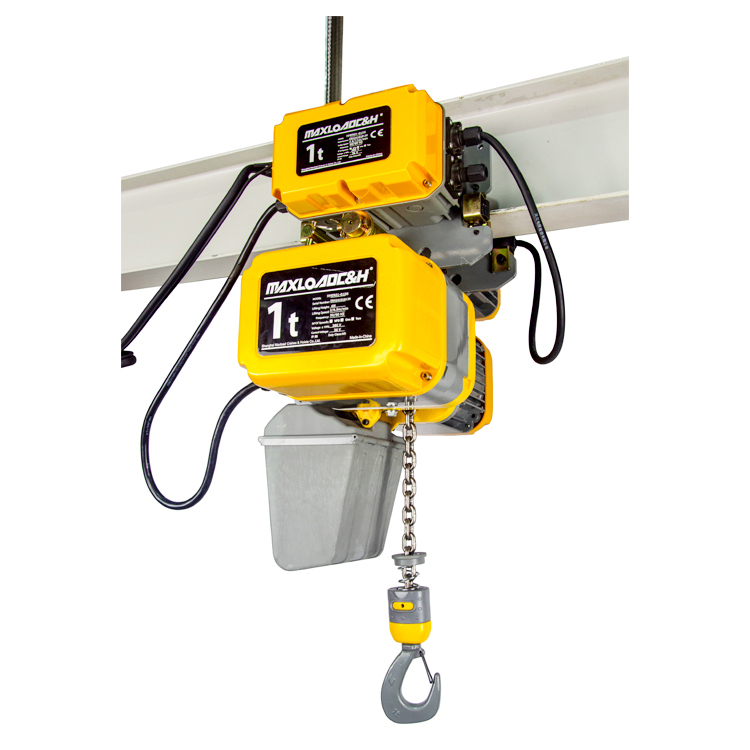
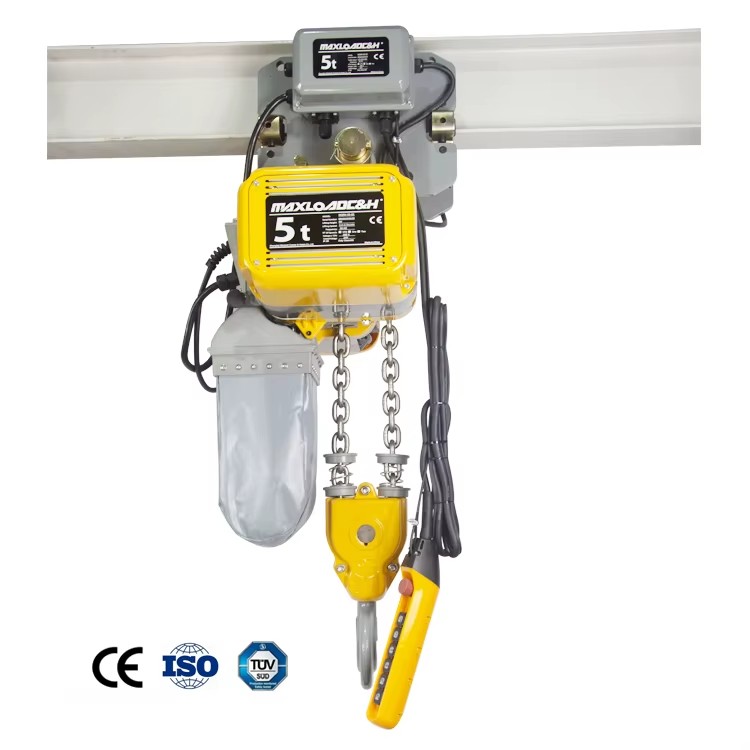
For the vast majority of assembly, machining, loading and unloading, and light-duty storage workstations, jib cranes are light-duty working-intensity equipment, and using them with electric hoists is a common configuration. However, during selection, one should not assume that all workstations are suitable for products of the same grade just because of the word "light-duty."
Consider the Specific Restrictions of the Environment on the Equipment
The air composition, temperature, and cleanliness requirements of the workstation environment directly determine the material and protection rating of the jib crane.
In workstations where flammable and explosive gases or dusts exist, the motor commutator and electrical components of an ordinary electric hoist may become ignition sources. Such workstations require explosion-proof lifting mechanisms, and the materials of the jib and pillar should also avoid generating sparks upon impact. In dust-free workshops or cleanroom workstations, the paint on carbon steel surfaces and exposed bearing grease may become sources of particle contamination, and stainless steel materials and sealed bearings are more reasonable choices. In cold storage or low-temperature workstations, ordinary grease will thicken or even solidify, so low-temperature grease must be used instead, and the low-temperature applicability of electrical components also needs to be confirmed.
These environmental factors may appear to be "additional requirements," but their impact on equipment usability is decisive. A jib crane that performs well in an ordinary workshop may not pass acceptance at all when placed in an explosion-proof or clean environment.
Conclusion
What the workstation environment determines is not "which jib crane to buy," but "in what form the jib crane should exist at this workstation." The installation method is determined by space constraints, the jib length by the coverage radius, the duty class by the operating frequency, and the material and protection by environmental conditions. Once these four dimensions are clarified separately, selection is no longer a parameter comparison, but a systematic sorting out of the workstation's material handling requirements. The final equipment specification is the result of mapping these requirements item by item, rather than an isolated number.
 0086 156 1824 5535
 0086 156 1824 5535
 kimliu@chnhoist.com