Selection Considerations for Matching Electric Hoists with Overhead Cranes
When planning a material handling solution for a factory workshop, warehouse, or assembly area, a common question is: what kind of lifting equipment should be installed at this workstation? Many people's first reaction is, "Just buy an overhead crane and hang an electric hoist on it." But actual selection is far from that simple. The same combination of an electric hoist and an overhead crane can have completely different structural forms, capacity configurations, and operating methods when placed in different workstation environments. Choose correctly, and workers operate smoothly and efficiency improves; choose incorrectly, and the equipment either sits idle and goes to waste, or workers find it cumbersome to use, with unending safety hazards.
This article attempts to sort out a logical selection approach based on the actual conditions of the workstation environment, to help you make a more reasonable judgment when matching electric hoists with overhead cranes.
First, understand the relationship between two basic concepts
Before discussing selection, it is necessary to clarify a common cognitive bias. An electric hoist and an overhead crane are not parallel options; they have a subordinate and load-bearing relationship. The electric hoist is the hoisting mechanism, responsible for lifting and lowering the load; the overhead crane is the load-bearing and moving platform that allows the electric hoist to cover a rectangular or circular working area.
Put simply, the electric hoist is the "hand," and the overhead crane is the "arm." Without the overhead crane, the electric hoist can only hang from a fixed point; without the electric hoist, the overhead crane is just an empty frame. The core of a workstation lifting solution is to decide, based on the area the workstation needs to cover, the weight that needs to be moved, and the operating frequency, what kind of "arm" should be paired with what kind of "hand."
Look at the workstation coverage requirement and choose the structural form
Workstation environments vary greatly. Some workstations only need lifting and movement within a circular area, while others need to cover a rectangular production line range. The choice of structural form first depends on where you need to "reach."
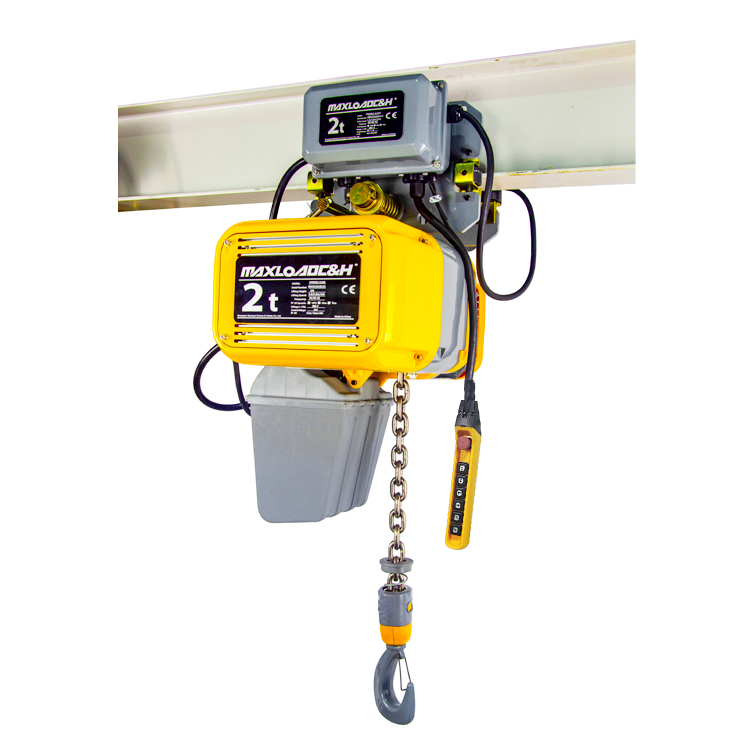
Rectangular coverage: workstation bridge crane
If your workstation is a rectangular assembly area, processing area, or storage position, and materials need to be lifted and moved at any position within the area, a workstation bridge crane is a suitable choice. Its structure consists of a movable main girder mounted on two parallel tracks, with the electric hoist traveling along the main girder. In this way, the hoist can achieve lifting and horizontal positioning at any point in the rectangular area, and the influence of the load position on the operating feel throughout the entire work unit is relatively small.
The lifting capacity of bridge workstation cranes is usually between 150 kg and 2 tons, with manually operated versions being the majority. The tracks generally use enclosed profiles, with the trolley rolling inside, making it less likely to accumulate dust and reducing pushing resistance, making it suitable for small and medium-sized parts assembly with positioning accuracy requirements.
Circular coverage: jib crane
If your workstation space is limited, or you only need to cover a fan-shaped or circular area centered on a certain column or wall, a jib crane is more economical and practical. One end of the jib is fixed to a column or wall, and the electric hoist travels along the jib beam. The jib itself can rotate, thereby covering a circular area. A jib crane has an operating characteristic that requires attention: the closer the load is to the end of the jib, the easier it is to push and rotate; the closer it is to the rotation axis, the more laborious it is to push. Therefore, when laying out the workstation, frequently handled material positions should be arranged in the outer half of the jib, rather than close to the column.
Choices under special constraints
If there is no load-bearing structure that can be suspended from the workshop ceiling, or the roof load-bearing capacity is insufficient, a floor-mounted workstation crane or jib crane is an alternative. Floor-mounted structures require the concrete floor to have sufficient thickness and strength, usually requiring at least 15 cm or more of reinforced concrete. If the workstation needs to be temporarily adjusted or relocated, a mobile gantry with casters is also a practical choice for small-tonnage, low-frequency scenarios.
Verify capacity and avoid "a big horse pulling a small cart"
There is an easily overlooked principle in lifting capacity selection: for manually operated workstation cranes, "just enough" is more important than "leaving ample margin."
The reason is simple. For a manually pushed crane, the equipment's own weight directly determines the physical effort the operator must exert. If your actual maximum lifting weight is 500 kg, but you choose a 2-ton bridge crane, the structural weight of the main girder and end girders will increase significantly, and the operator will have to bear this extra "dead weight" every time they push it, actually making the equipment heavy and difficult to use.
The general recommendation is: verify the heaviest material actually needing to be handled at the workstation, add the weight of the lifting attachment, and then reserve a reasonable margin. For manual workstation cranes, this margin does not need to be too large. Only conventional handling needs exceeding 2 tons, or scenarios with high operating frequency, require consideration of electric drive or a larger-class overhead crane.
Determine the drive mode: manual or electric
The choice of drive mode is essentially a "human factors engineering" calculation problem.
The advantage of manual operation lies in direct response, precise positioning, and speed controlled by the person. The operator pushes as much as the equipment moves, with no delay and no inertial overshoot. For small and medium-tonnage, medium- and low-frequency workstations requiring fine positioning, manual operation is often the more efficient choice.
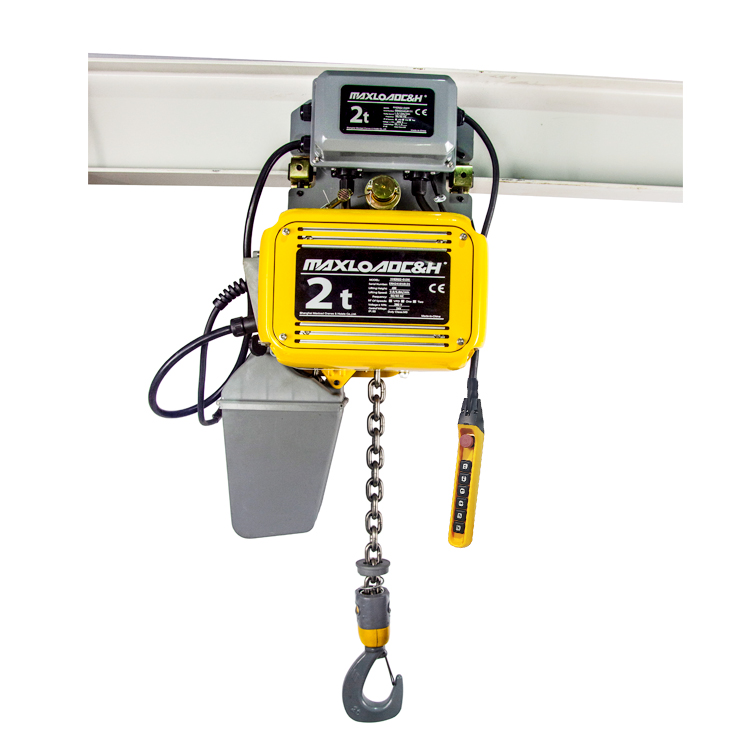
However, the following situations require serious consideration of electric drive:
The lifting capacity exceeds the comfortable range for the operator to continuously control manually. Although there is no absolute boundary, experience suggests that for loads exceeding 2 tons, manual pushing and precise positioning become laborious.
The operator cannot follow the load throughout the entire process. For example, when lifting and transporting needs to cross equipment, pits, or areas the operator cannot conveniently reach, manual operation loses the advantage of "on-site human control," and an electric drive must be used to achieve remote control.
The operating frequency is extremely high. If the workstation needs to complete dozens of lifting and movement cycles per hour, manual operation will quickly accumulate physical exhaustion, actually reducing overall efficiency.
A pragmatic judgment standard is: let the operator try it themselves. During the solution stage, simulate the actual handling process with a manual model or similar equipment. If workers report, "It can be pushed, but after a whole day it's unbearable," then an electric drive should be considered.
Match the working class, not just the lifting capacity
This is the most easily underestimated selection dimension. Many procurement decisions only look at "how many tons the lifting capacity is," while ignoring the "busyness level" the equipment must withstand at the workstation.
The working class of a crane is determined by two factors together: load state and utilization level. Simply put, a crane that frequently lifts near full load and a crane that occasionally lifts light loads, even if they have the same lifting capacity, require completely different design strength, safety factors, and durability.
A common misconception is that "if the lifting capacity is large, the working class must be high." In fact, a 500-ton crane used for installation and maintenance at a power station, although its lifting capacity is enormous, has extremely low usage frequency and very few full-load occurrences, so its working class may be sufficient at A1 to A3. Meanwhile, a frequently used 5-ton crane in a warehouse may need a working class of A6 to A7 to withstand the busy daily rhythm.
For workstation cranes, if your workstation is single-shift, with dozens of cycles per day, and mostly lifts light loads, a manual workstation crane can usually handle it. But if the workstation runs three shifts, with hundreds of lifting cycles per shift, and material weights approach the equipment's rated value, then the working class must be carefully calculated, and equipment with the corresponding design class selected. Otherwise, structural fatigue or mechanism failure will soon appear.
Do not ignore those "soft" but fatal environmental factors
Some conditions of the workstation environment often have no corresponding checkboxes in selection tables, yet they directly determine whether the solution is feasible.
Clear height is the first hard constraint. The tracks and main girder of a workstation bridge crane require a certain amount of vertical space. If there are pipes, cable trays, lighting equipment above the workstation, or the building itself has limited story height, it is necessary to accurately calculate the effective clear height from the floor to the roof, then subtract the height of the crane structure and the lowest position of the hook. Workstation cranes with enclosed profile tracks have a certain advantage in this regard, with compact cross-sections that can adapt to lower clear heights.
Floor load-bearing capacity and structural support are the second constraint. Floor-mounted or column-mounted cranes need to transmit force to the floor or building structure. Whether the thickness and reinforcement of the concrete floor slab are sufficient, and whether the load-bearing capacity of the building's steel beams allows suspension, all need to be confirmed during the solution stage. If the floor or roof load-bearing conditions are not ideal, dispersed-load design or additional support structures may be necessary.
The operator's working habits are equally important. Whether the workstation operation is standing or seated, whether the operator needs to turn frequently, from which direction materials come and to which direction they go—these details determine the direction of the crane's main girder, the jib angle, and the installation position of the hoist. A good workstation lifting solution should make it unnecessary for the operator to deliberately "go find" the equipment; instead, the equipment should naturally be in the position most convenient for the operator.
Connect the selection logic
Return to the workstation itself. A reasonable selection sequence is roughly as follows:
First look at what shape of area the workstation needs to cover—rectangular or circular—which determines bridge type or jib type. Then look at how heavy the material actually needs to be handled—do not over-size, especially for manual equipment. Then ask how the operator will use it—whether remote control is needed and how high the frequency is. Next, calculate the working class—whether the busyness level and full-load level match. Finally, confirm the environmental constraints—whether the clear height is sufficient, whether the floor can support it, and whether the layout is convenient.
After going through this logic, you will find that "electric hoist plus overhead crane" is not a standard answer, but a selection space that needs to gradually converge according to workstation conditions. The same hoist, paired with different track structures, drive modes, and capacity specifications, is suitable for completely different working scenarios. A truly professional choice is not to choose the most expensive or the largest, but to make the equipment recede to the point of "just barely not existing" in a specific workstation environment—the operator focuses on the work at hand, and the act of handling itself no longer becomes a burden.
 0086 156 1824 5535
 0086 156 1824 5535