How to Choose an Electric Hoist Suitable for the Workstation
Choosing an electric hoist can be complex or simple. It is complex because the parameter table is packed with density figures such as tonnage, lifting height, speed, and duty class. It is simple because there is only one core logic: the equipment must match the workstation, not the other way around, where the workstation has to accommodate the equipment. Many workshops tend to make one mistake during procurement—they first look at price, then at tonnage, and once it is roughly adequate, they make the decision. As a result, after installation, they discover that either the lifting height is short by just a few dozen centimeters and cannot reach, or the motor burns out after a few months of frequent starting and stopping, or the chain jams in a dusty environment. The root causes of these problems are not the equipment quality, but the omission of the workstation environment as a variable during selection.
This article starts from the perspective of the workstation environment and sorts out the dimensions that truly need attention in electric hoist selection.
First, look at the workstation space: clear height determines the model
This is one of the most easily underestimated factors. In many old factory buildings, renovated workshops, or workstations where suspended ceilings and pipelines have been added, the actual available vertical space is tighter than imagined.
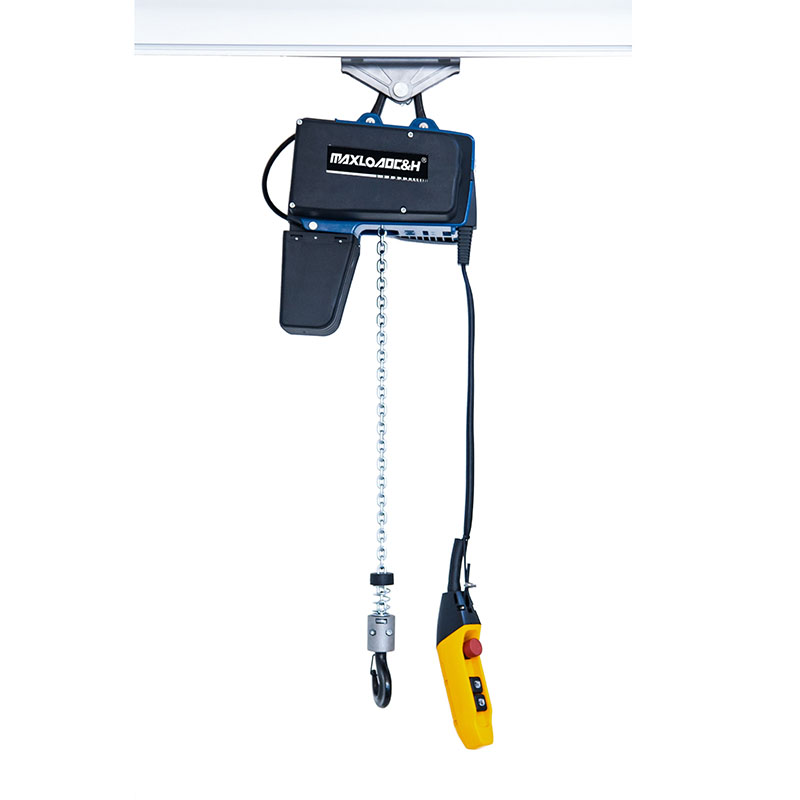
The structure of a conventional wire rope electric hoist has the motor, drum, and reducer arranged in a line, and the body itself consumes a considerable amount of height. If the distance from the I-beam to the ground is limited, after installing the hoist, the hook may not even reach the workpiece. At this time, what needs attention is the low-headroom model. By shortening the structural distance between the body and the track, a low-headroom hoist can increase the effective lifting height by 200 to 500 millimeters compared with an ordinary hoist. Do not underestimate this figure; it is often the dividing line between "can be installed" and "cannot be installed."
The judgment standard is simple: measure the distance from the bottom surface of the I-beam to the ground, subtract the height required by the spreader and the workpiece itself, and then see whether the clear height of the hoist itself can meet the requirement. If the margin is tight, low headroom is the only choice, with no room for a second-best option.
In addition, whether the workstation needs to move materials horizontally also determines the installation method. For single-workstation fixed-point lifting, a fixed type is sufficient. If it needs to move left and right along a track, a traveling trolley must be equipped.
Next, look at operating frequency: duty class is a hidden cost line
There is an easily overlooked indicator on the parameter table of electric hoists: duty class. Common ones are M3, M4, M5, and M6, or the corresponding FEM standard classifications. This figure represents the designed usage intensity of the equipment and directly determines the service life of the motor and brake.
Many buyers only look at whether the tonnage is sufficient and not at the duty class. As a result, in scenarios such as assembly line workstations and high-frequency loading and unloading, using an M3-class hoist to handle work intensity close to M4 or even M5 makes motor overheating, brake wear, and contactor sticking the norm. This is not a quality problem, but a selection mismatch.
How do you determine what class a workstation belongs to? A rough estimate is to look at the number of starts and stops per hour and the proportion of continuous operation time. In ordinary maintenance workshops or warehouses with occasional lifting, where loads are randomly distributed, M3 class is sufficient. But if it is an assembly line workstation where workpieces need to be frequently lifted, lowered, and positioned, or continuous operation scenarios such as casting handling, the duty class should be at least M4, and for frequent inching operations M5 may even need to be considered.
A practical principle: it is better to choose one level higher than to use it right at the upper limit. If the duty class has margin, the durability of the equipment will differ noticeably.
Look at environmental characteristics: protection rating and special certification
The impact of the workstation environment on electric hoists is mainly reflected in the protection rating and explosion-proof requirements.
Dusty environments deserve separate mention. Metal chips in machining workshops, molding sand dust in foundries, and sawdust in woodworking workshops—once these fine particles enter the interior of the motor or the brake gap, they will at least accelerate wear and, at worst, cause brake failure. The protection rating of conventional electric hoists is mostly between IP44 and IP55. For workstations with severe dust, it is recommended to choose models with enhanced sealing structures, or to confirm that the protection rating is not lower than IP54.
The requirements for humid or outdoor workstations are more direct. The protection rating needs to be IP55 or above, and outdoor environments without cover should consider IP66. There is an easily overlooked point here: it is not that everything is solved once a rain shelter is installed. The corrosion of electrical components by condensed water, washing water mist, and high-humidity air is continuous, and equipment with insufficient protection rating often has frequent problems after the first rainy season.
Explosion-proof environments are a red line, with no room for negotiation. In places such as chemical workshops, paint booths, flour processing areas, and pharmaceutical workshops where flammable gases or dust exist, the motor sparks and surface high temperatures of ordinary electric hoists are ignition sources. Such workstations must use models with the corresponding explosion-proof certification, and the explosion-proof rating must match the specific medium in the environment. There is no such thing as "roughly usable" in explosion-proof selection; there are only two states: "certification matches" and "cannot be used."
Look at operating precision: the speed control method determines whether it is easy to use
Whether the lifting speed parameter is single-speed, dual-speed, or variable-frequency controlled depends on the workstation's requirements for precision.
A single-speed hoist has only one lifting speed and is usually used in situations where there are no strict requirements for positioning accuracy. Its advantages are simple structure, low failure rate, and low maintenance cost. For warehouse loading and unloading and material transfer in rough machining workshops, single speed is fully sufficient.
But if the workstation involves precision positioning—such as mold assembly, fitting shaft parts into holes, or precise placement of sheet metal parts—the "rush into position at full speed" operation method of a single-speed hoist is very awkward. Operators have to repeatedly inch the hoist and rely on experience and feel to make up for it, resulting in low efficiency and a risk of collision. In this case, dual-speed or variable-frequency control is a better choice. A dual-speed hoist has two ranges, fast and slow, with the slow range used for fine adjustment when approaching the target position. Variable-frequency control can achieve stepless speed regulation, making starting and stopping smoother and reducing impact on the load.
From actual user experience, for workstations involving positioning operations, dual-speed is a reasonable baseline. If the budget allows and there are further requirements for efficiency, the improvement in smoothness and precision brought by variable-frequency control is worth the investment.
Load: leaving margin is common sense, but it is easy to "save" away
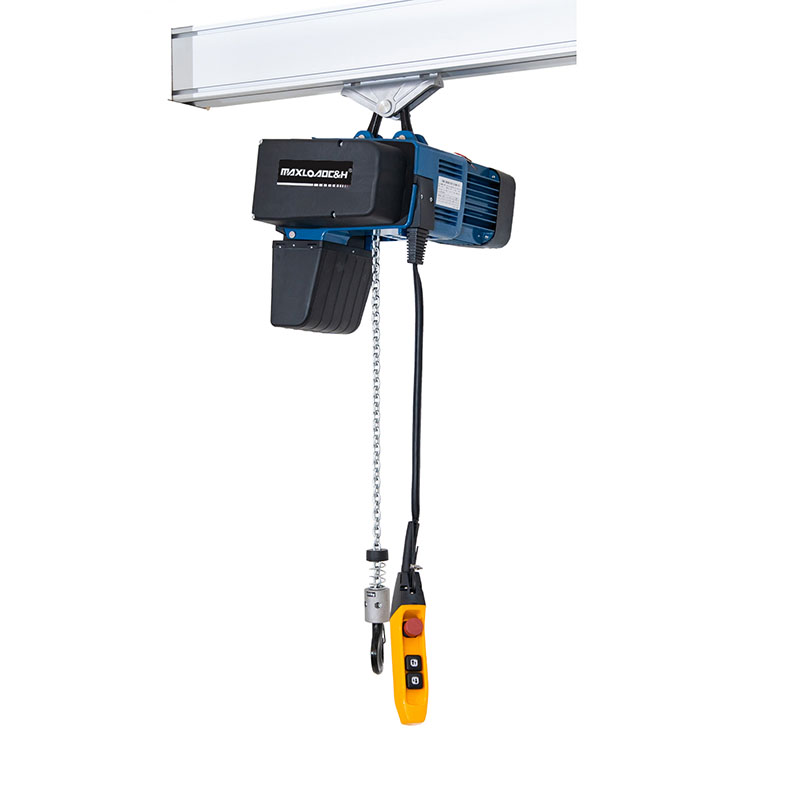
There is a simple but important principle for tonnage selection: do not choose right at the maximum lifting weight. The dynamic load impact at the moment of lifting, the self-weight of the spreader, and performance degradation after long-term use will all make equipment that is "just enough" quickly become insufficient. For conventional working conditions, it is recommended to reserve a safety margin of 1.25 times, and for high-frequency operations or workstations with vibration, 1.5 times is recommended.
Another easily overlooked detail is the weight of the spreader. Attachments such as fixtures, rigging, and spreader beams may not look impressive, but together they may weigh several dozen kilograms. If the workpiece itself is already close to the rated load of the hoist, the weight of the spreader will push the total load into the overload range.
Summary
The logic of electric hoist selection is essentially the process of translating the workstation environment into equipment parameters. Clear height corresponds to the model structure, operating frequency corresponds to the duty class, environmental characteristics correspond to protection and certification requirements, operating precision corresponds to the speed control method, and load conditions determine the tonnage margin. These dimensions are independent yet interrelated, and if any one is ignored, the equipment may reveal various awkward issues after installation.
A practical suggestion is: before asking for quotations, first clarify these conditions of the workstation—clear height under the beam, roughly how many lifts per hour, whether the environment has dust or corrosive media, whether precise positioning is needed, and how much the heaviest lifted object plus the spreader weighs in total. Write these items clearly before going to suppliers. Selection efficiency will be much higher, and the probability of being misled will be much lower.
 0086 156 1824 5535
 0086 156 1824 5535