On-Site Adaptation Logic for Electric Hoists
When many people select an electric hoist, they are accustomed to first flipping through catalogs to look at tonnage and price, treating the workstation environment as a secondary factor to be considered "later." In reality, it is exactly the opposite: the same 3-ton hoist may be a handy tool on an assembly line, but in a chemical plant it may be a safety hazard, and in a low old factory building it may not even be able to lift to the working height. The workstation environment is not a supplementary condition for selection, but the starting point that determines the direction of the model. Below, according to on-site logic, we sort out how to select the right electric hoist for the actual workstation from four aspects: space, environment, work rhythm, and installation method.
Measure the space first, then discuss everything else
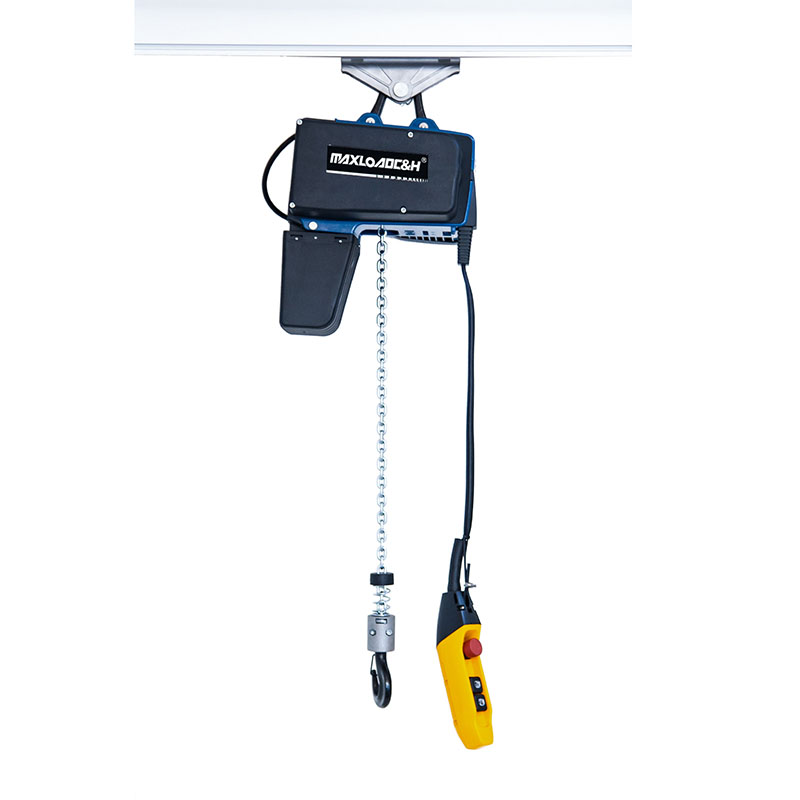
The first threshold in workstation selection is often headroom, not lifting capacity. The height under the factory building beams and the effective distance from the track to the ground directly determine which models can get in and which cannot. Conventional wire rope electric hoists have large lifting heights and smooth operation, but the machine body itself occupies more vertical space, making them suitable for newly built workshops or standard factory buildings with ample floor height. For old renovated workshops, low mezzanines, and workstations with dense ceiling pipelines, a different approach is needed: chain electric hoists have a more compact structure and a thin body, and in the same under-beam height they can squeeze out several tens of centimeters of effective lifting stroke, precisely addressing the awkward situation of "it can be installed but cannot lift all the way down."
There is a detail that is easily overlooked: lifting height is not simply factory building height minus hoist height. The hook block itself occupies space, the rigging also has height, and how high the workpiece needs to be lifted off the ground or equipment table to be "sufficient" must all be measured clearly before selection. If the workstation needs to lift and transport across equipment or material racks, the distance from the lower edge of the track to the top surface of the obstacle must also be included. Once the space account is calculated in detail, the choice between chain and wire rope naturally becomes clear.
Environmental attributes determine the baseline of the model
Space addresses "whether it can be installed," while environment addresses "whether it can be used." Ordinary workshops are dry and free of corrosive media, and models with standard protection ratings are sufficient. But some workstation environments will directly rewrite the selection conclusion, with no room for compromise.
In dust environments, the nature of the dust must be considered. General dust can still be handled by increasing the protection rating, but for combustible dusts such as flour, aluminum powder, and coal powder, the tiny arcs generated by the electrical components of ordinary hoists during normal switching are enough to constitute an ignition source, so models with the corresponding dust explosion-proof rating must be selected, and "adding a dust cover" cannot be used as a substitute. For humid or outdoor workstations, the protection rating must be at least IP65; the erosion of water splashes and condensation on electrical insulation is gradual, and problems may not be visible at first, but by the time faults appear, the entire control system is often already involved. Corrosive atmospheres—acid mist, alkali liquid volatilization, salt spray—require systematic anti-corrosion treatment from coatings, chain materials, to fasteners; merely painting the shell cannot solve the corrosion problem of the chain and hook.
There is another category of workstations that is easy to misjudge: cleanrooms and precision assembly areas. The problem here is not whether the equipment will break down, but whether the equipment itself will become a contamination source. The chain lubricating grease of ordinary hoists will throw off trace oil mist during operation, and particles generated by brake wear may also fall onto the workpiece surface. What clean workstations need is a fully enclosed housing, low-volatility lubricating grease, and stainless steel or special coating treatment on contact parts. If selection only focuses on lifting capacity, this type of hidden contamination risk often only gets traced back after product batch problems occur.
Work rhythm determines speed configuration and control method
For hoists of the same tonnage, the price difference between single-speed and dual-speed is not large, but the experience in use is entirely different. For occasional lifting in warehouses and occasional equipment lifting at maintenance workstations, single-speed models are completely sufficient, with simple structure, few failure points, and easy maintenance. But once a workstation enters a production line rhythm—high-frequency loading and unloading, workpieces needing to land precisely on fixtures, or lifting precision parts prone to collision—the start-stop impact of single speed becomes a problem. Dual-speed or variable-frequency models can achieve millimeter-level inching positioning in the slow gear, and acceleration and deceleration during lifting and traversing are gentler; the workpiece does not sway, and the operator does not need repeated fine adjustment.
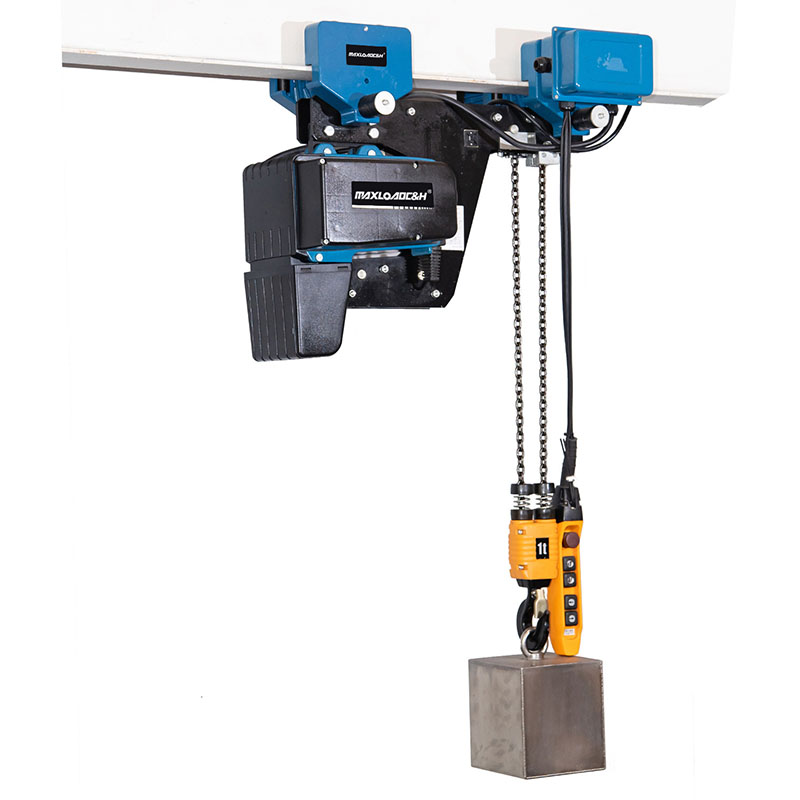
The control method is likewise bound to the workstation form. For ground-operated workstations, the pendant control follows the person, and the operator stands next to the workpiece watching the lifting point with an unobstructed line of sight, which is the most direct and reliable method. But at some workstations the operator needs to retreat beyond a safe distance to observe the overall situation, or the lifting path crosses equipment and is not easy for personnel to approach; in such cases the remote control is not a "premium option" but a necessary means of operational safety. If the hoist is installed on a track and needs lateral movement, a distinction must also be made between manual trolleys and electric trolleys: manual push is suitable for occasions with infrequent movement and low positioning accuracy requirements, while electric trolleys are suitable for production line layouts requiring frequent cross-workstation transfer or where it is inconvenient for the operator to walk along with the trolley.
Working class is a hidden cost line
Working class does not directly correspond to any visible workstation feature, but it determines how long the equipment can last under given working conditions. For the same nominal 3 tons, an M3-class hoist is designed for about 400 hours of full-load operation, while an M5-class hoist more than quadruples that to over 1,600 hours. If a workstation actually has few lifts per day and most lifts are far below the rated load, the economic advantage of a lower-class model is reasonable. But if the workstation is on a continuous production line with hundreds of cycles per shift, or the lifted workpieces are often close to full load, the purchase price difference saved by using a lower-class model will be paid back within two or three years in the form of downtime repairs and premature replacement.
Judging the working class does not require precision down to the hour, but it is necessary to have a clear idea of the workstation's real rhythm: roughly how many lifts per day, the proportion of full load and light load, and the typical height of a single lift. Comparing these rough estimates with the supplier's class recommendations is far more reliable than looking only at the tonnage nameplate.
Finally
The prerequisite for doing workstation selection well is to organize the on-site information into a list that can be handed to the other party: clear height under the beams and track height, the total weight of the heaviest workpiece including rigging, the approximate number of lifts per day, whether there are combustible gases or dust at and around the workstation, whether there is moisture or corrosive media, whether slow-speed positioning is needed when the workpiece is being placed, and where the operator stands to operate. The more specific this list is, the more targeted the selection recommendations will be. Conversely, if only a "3-ton" requirement is given, any model can be said to "work," but whether it works well and how long it will last is another matter. An electric hoist is not an isolated device; it is a link in the workstation's material flow. The endpoint of selection is not buying a machine with compliant parameters, but making this link not become a bottleneck in terms of space, environment, rhythm, and human operation.
 0086 156 1824 5535
 0086 156 1824 5535