The On-Site Adaptation Logic of Electric Hoists
When many people select an electric hoist, they are used to first flipping through catalogs to look at tonnage, or simply asking "how much is a X-ton one?" This approach often plants hidden risks in actual use: only after the equipment is installed do they discover that the lifting height is short by a stretch, that the chain jams every few days, or that the motor burns out within half a year in a dusty environment. In electric hoist selection, tonnage is only the entry ticket. What really determines whether it can run steadily at a certain workstation for several years is that set of seemingly trivial on-site conditions—headroom, dust, humidity, work tempo, and operating method. This article breaks down the selection logic along several core dimensions of the workstation environment.
I. First Look Up: Headroom Determines the Structural Form
The most intuitive limitation at a workstation comes from above. In old plant renovations or where the process line has already been finalized, the clear height under the beam is often largely taken up by piping, cable trays, and ventilation systems, leaving extremely limited space for the hoist body.
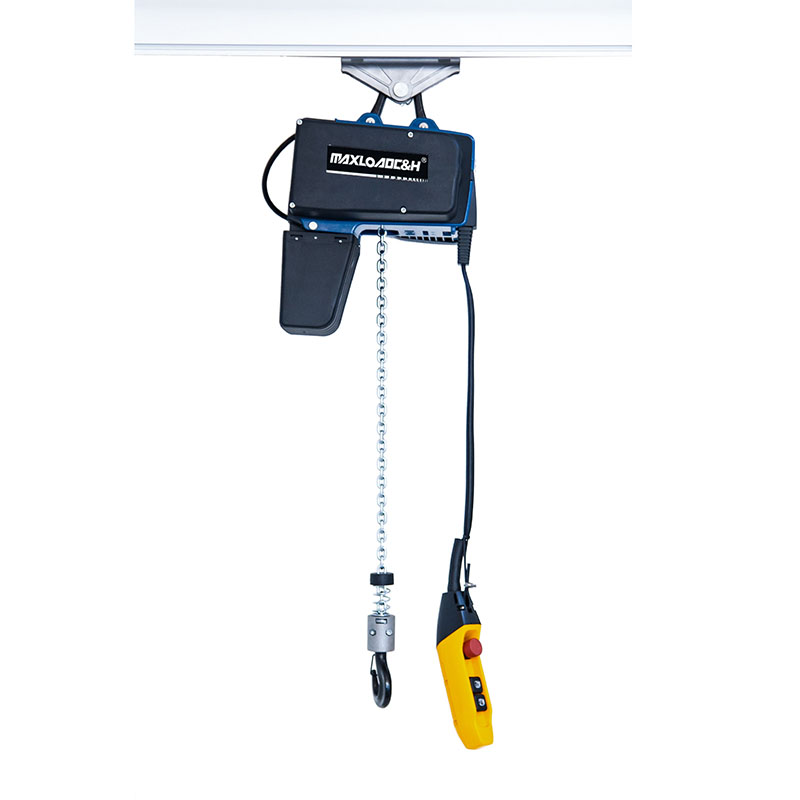
At this point, if one follows the conventional approach and selects a wire rope hoist, the height of the drum plus the motor can easily make the hook almost touch the ground even when unloaded, leaving very little effective lifting stroke. For low-headroom workstations, chain hoists should be given priority; their structural compactness has a natural advantage here. The chain-wheel-driven chain method does not require the large radial space of a drum, so the overall height can be reduced considerably. Conversely, if the factory building has ample height and the lifting height needs to be more than ten meters or even higher, the drum rope-winding method of wire rope hoists is better suited to long travel, and the sag and sway problems caused by the self-weight of the chain at high positions do not exist in the wire rope solution.
There is also an easily overlooked detail: whether there is an overhead crane track above the workstation that needs to be shared. If the hoist is to be hung on the lower flange of an existing I-beam for operation, it is necessary to confirm the I-beam specification and the matching range of the hoist trolley. Not just any traveling hoist can be clamped onto it.
II. Environmental Media: Dust, Moisture, and Corrosive Substances
The second layered dimension of the workstation environment is what is in the air.
In ordinary assembly workshops, warehouses, and dry machining areas, electric hoists with standard protection ratings are sufficient. But once there are suspended particles in the air—grinding dust, foundry smoke, woodworking sawdust, packaging paper scraps—the situation changes. Dust will adhere to the motor cooling fins and change the heat dissipation conditions; more troublesome is that it drills into the brake gaps and control box contacts, causing delayed braking or poor contact. When selecting for dusty workstations, the protection rating should be raised at least one level, and the sealing structure of the brake should be clarified. The conical rotor braking method is usually more reliable in dusty environments than flat brakes, because its braking surface is inside the motor and is not in direct contact with external dust.
Humid and corrosive environments are another concern. Beside electroplating lines, above cleaning workstations, and in aquatic product processing workshops, moisture and acid-alkali mist coexist in the air. Under such conditions, the rusting speed of hoist housings with ordinary paint far exceeds expectations. Once corrosion spreads from the housing to fasteners and chains, even disassembly during maintenance becomes a problem. For such workstations, attention should be paid to the housing coating process and chain material. The service life difference between galvanized chains and stainless steel chains in humid environments is real. If there is a possibility of direct water washing at the workstation, IP65 is the bottom line and IP66 is more prudent, but note that an increase in protection rating is often accompanied by a compromise in heat dissipation capacity. During selection, confirm whether the manufacturer's balance between sealing and heat dissipation is suitable for your actual operating frequency.
As for explosion-proof areas, the selection logic is completely different. The certification path must be followed according to the explosion-proof area classification and substance category, and it cannot be patched together by adding seals to an ordinary hoist.
III. Work Tempo: Duty Class Is Easier to Underestimate Than Tonnage
For workstations of the same tonnage, lifting ten times a day and lifting three hundred times a day place two different sets of requirements on the hoist.
The motor of an electric hoist is designed for intermittent periodic duty, with heat generation and heat dissipation seeking balance within the cycle. If the workstation is an assembly-line paced operation and the hoist is almost constantly lifting, lowering, and inching into position, the actual energization rate far exceeds the nominal value on the nameplate. The motor then operates under long-term heat accumulation, and insulation aging accelerates sharply. In FEM standards, the energization rate ED and the number of cycles per hour are used to quantify this load, but on site very few people actually calculate this figure. A practical judgment method is to observe the busiest hour at the workstation and add up how many minutes the hoist actually moves. If it exceeds half an hour, it should not be selected as light or medium duty.
Light duty is suitable for maintenance workstations or warehouse loading and unloading points with occasional lifting and intermittent use. Assembly-line workstations and machining positions with high-frequency loading and unloading should be at least M5 to have margin. Precision assembly workstations also need to additionally consider dual-speed or variable-frequency requirements—when a single-speed hoist is inched for fine adjustment, even a brief press of the button will move the hook by a minimum fixed stroke. For workpieces requiring millimeter-level positioning, this "jump on one press" characteristic is very difficult to use. The slow-speed gear of a dual-speed hoist reduces the speed to about one tenth of normal speed during fine adjustment, and the operating feel is completely different.
IV. Matching the Operating Method with the Workstation Layout
How the hoist is controlled and where the person stands to operate it are often left to the end during the selection stage, and only after installation is it discovered that the pendant control cable is not long enough or that the wireless remote has a blind spot in a certain area.
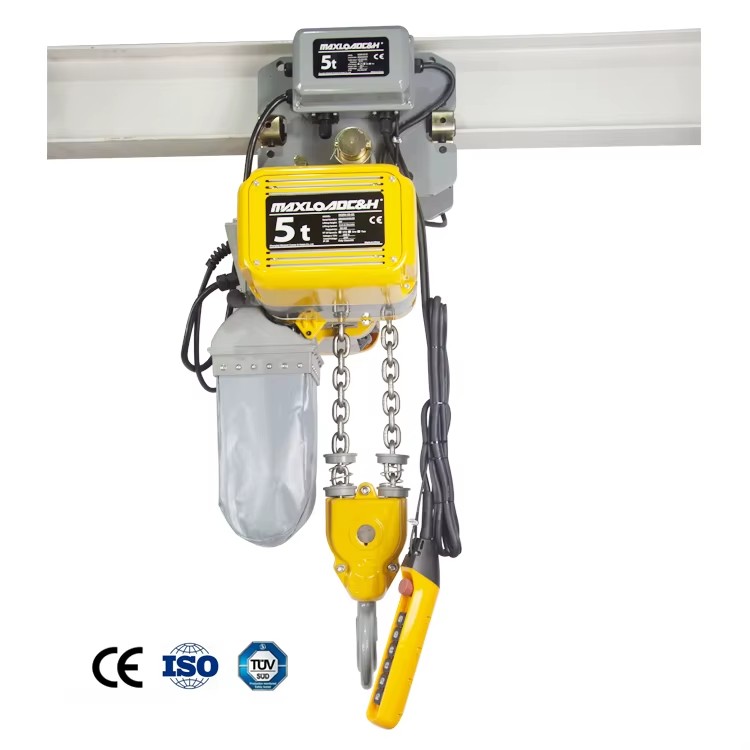
For fixed workstations where the operator's position is basically unchanged, pendant control is the most direct and reliable. The cable length should be configured according to the comfortable distance from the operator's standing position to the hoist hook, with some margin but not too long. Cables dragging on the ground are a tripping hazard. If the workstation span is large, the operator needs to walk along with the lifted load, or if the hoist is installed where the operator's line of sight is blocked, then the necessity of wireless remote control becomes apparent. However, attention should be paid to interference with wireless signals in the workstation environment—dense steel structures and areas with concentrated variable-frequency drives may affect remote control stability. During selection, confirm the frequency band and anti-interference capability of the remote control system, rather than assuming that "with remote control it will definitely work well."
There is also a practical detail: the distance from the hook to the operator's hand. At some workstations, workpieces need to be hooked and unhooked frequently. If the hoist's upper limit is set too high, the chain must be let out a long way each time to reach the workpiece, slowing down the operating rhythm. During selection, "hook height" should be considered as a parameter, rather than looking only at the maximum lifting height.
V. The Neglected Installation and Maintenance Access
Although this last item does not directly belong to the "workstation environment," it determines whether the hoist can normally survive after installation.
At some workstations, the space looks sufficient on drawings, but after the hoist is installed, the motor junction box faces the wall and even a screwdriver cannot be inserted during maintenance; or the brake adjustment window is blocked by a structural beam, and daily inspection can only be judged by sound. During the selection stage, the installation method should be confirmed down to the specific orientation: the suspension point direction of a fixed hoist, the track direction of a traveling hoist, and the position of the pendant control cable outlet. These details are usually not marked in catalogs, but on site a difference of ten centimeters is the difference between whether maintenance is possible or not.
Another layer of meaning of maintenance access is the spare parts logic. The workstation environment determines which components will fail first: in dusty environments, brakes and contactors fail first; in humid environments, housings and chains fail first; at high-frequency workstations, motor insulation fails first. During selection, taking the local or nearby availability of wearing parts as a consideration is more practically meaningful than simply pursuing a certain paper specification.
In summary, the decision sequence for selecting an electric hoist for a workstation environment should be: first use headroom and lifting height to define the structural form (chain or wire rope, low headroom or conventional), then use dust, moisture, and corrosiveness to determine the protection and material grade, then use the work tempo to work backward to the duty class and speed configuration, and finally use the operating flow line and maintenance accessibility to verify installation details. Tonnage certainly must be sufficient, but beyond tonnage, these four dimensions are what allow a hoist to "hold its ground" at a specific workstation.
 0086 156 1824 5535
 0086 156 1824 5535