From "Can Lift It" to "Can Keep Lifting It
When many people select an electric hoist, they habitually look only at the tonnage and lifting height, thinking that as long as it can lift the load and reach the height, that is enough. When the equipment is purchased and installed, the first three months indeed present no problems, but after half a year the motor begins to overheat frequently, the brake makes abnormal noises, and electrical components fail one after another in the dust. Only then do they realize that the little effort saved on selection at the beginning has all turned into the cost of downtime repairs and production line interruptions.
The selection of an electric hoist is essentially not about choosing "a tool with enough strength," but about choosing a lifting solution that can coexist with the workstation environment over the long term. A hoist of the same tonnage, placed in a clean electronics workshop versus a foundry workshop, has completely different configuration logic. The following text breaks down the core dimensions of the workstation environment one by one and clarifies the variables that are easily overlooked during selection.
Determine the working class first, then discuss everything else
No matter how good the environment is, if the working class is selected too low, the equipment still will not hold up. The working class reflects the theoretical operating time of the hoist under full load, and it determines the design margin of the motor, brake, and gearbox. According to common classification systems, light use corresponds to about four hundred hours of full-load operation, medium use to about eight hundred hours, and busier working conditions to more than one thousand six hundred hours.
How do you determine which category your workstation belongs to? Do not rely on a feeling that "it is not used much." Take a pen and calculate the total duration of actual lifting actions in one shift, then multiply it by the number of shifts per day and the number of working days per year. If the calculation shows less than one hour of full-load operation per day, the light class is sufficient; if the workstation is a production line paced operation where lifting is required once every two minutes, even if each lift lasts only ten-plus seconds, the accumulated total far exceeds the light category. Another easily overlooked variable is load distribution: if the workpieces lifted at the workstation are close to the rated value all year round, even if the total time is not long, the working class should be raised by one level, because the thermal load and wear rate of the motor and brake under near-full load are not on the same order of magnitude as under light-load conditions.
Only when this step is done solidly does the subsequent environmental adaptation become meaningful. The working class is the foundation; if the foundation is insufficient, no amount of protection can make up for it.
Clean and hygienic workstations: the pollution source is the equipment itself
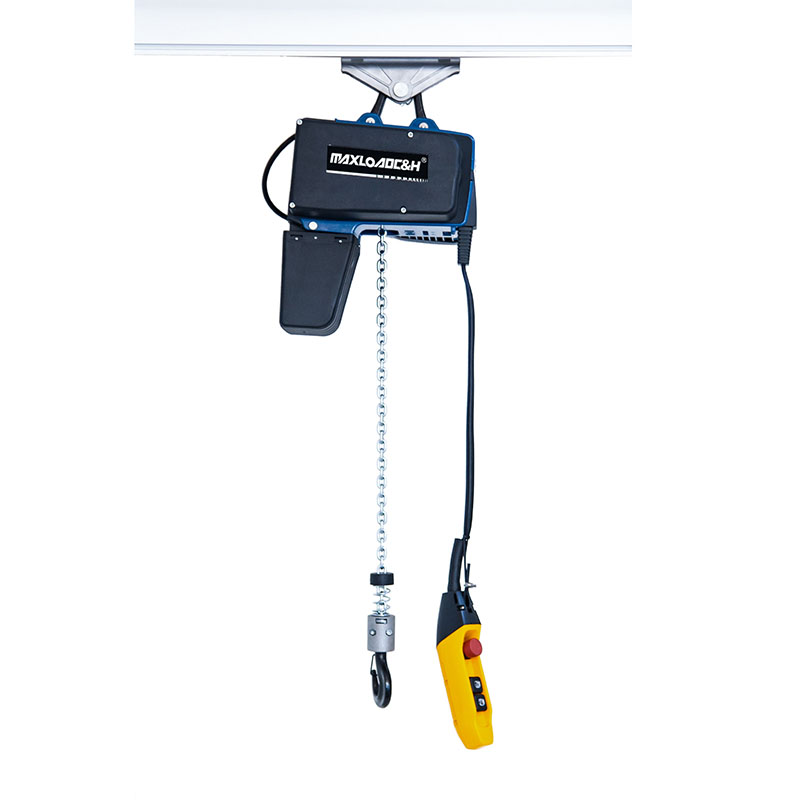
For workstations such as electronics assembly, pharmaceutical packaging, and food processing, the sensitive point regarding the environment is not "whether the equipment will break," but "whether the equipment will contaminate the product." Ordinary wire rope hoists have two hidden pollution sources here: wire ropes require lubrication, and the lubricating oil will attract dust and be slowly thrown off; the friction powder from the brake and the breather valve of the gearbox may both release particles into the surroundings.
For such workstations, "the equipment's own dust generation" should be reviewed as a hard indicator during selection. For the lifting medium, priority should be given to fiber belts as a replacement for wire ropes. Fiber belts require no lubrication and fundamentally eliminate the risk of oil being thrown off. Combined with motors and brakes with a higher sealing rating, this can significantly reduce particle release. If the lifting height and tonnage exceed the coverage range of fiber belts, the next-best choice is a chain hoist with a fully enclosed box structure. The box isolates internal grease and wear particles inside the shell, and the outer shell uses a smooth, easy-to-clean surface treatment to avoid dust accumulation in dead corners. There is also a small detail during installation: set the hoist's parking position on the upstream side of the clean area's airflow or near the return air outlet, so that any trace amount of escaping material is carried away by the airflow rather than falling into the workstation. This is more effective than simply piling on protection ratings.
High-temperature and thermal radiation workstations: distinguish "ambient heat" from "workpiece heat"
In foundry, forging, and heat treatment workshop workstations, the impact of heat sources on the hoist follows two paths. One is that the ambient temperature itself is high, the motor's heat dissipation conditions deteriorate, and insulation aging accelerates; the other is that the lifted workpiece itself carries high temperature, and thermal radiation directly bakes the bottom of the hoist—the chain, hook block, and limit components bear the brunt. The response strategies for these two paths are different, and they must be confirmed separately during selection.
If the hoist's parking position or lifting path is directly above the furnace opening, thermal radiation is the main contradiction, and the focus should be on the temperature resistance of the hook block and chain, as well as the heat insulation protection of the bottom limit switch. If the overall ambient temperature of the workshop is high, then the temperature rise margin of the motor and brake is the core issue. A practical way to judge is to ask yourself, "In the hottest days of summer, what is the approximate air temperature at the top of the workstation?" Above forty degrees, the rated working condition of an ordinary motor is already optimistic; if it is above fifty degrees for a long time, high-temperature-resistant insulation and brake heat dissipation design must be written into the selection conditions, rather than waiting until the equipment arrives on site and then trying to remedy it by adding fans.
There is also a category of situations in between: the workpiece does not directly bake the hoist, but oil fumes and dust are mixed in the workshop and adhere to the motor cooling fins, forming an insulating layer. Under such working conditions, the cleaning cycle of the cooling fins should be shortened, and during selection priority should be given to motor housing designs with larger fin spacing that are less prone to fouling, or simply arrange the motor away from the oil fume settling area.
Corrosive and humid workstations: the protection rating is not the only answer
In electroplating, acid pickling, seaside factory buildings, or cold storage, corrosive media and humidity erode the hoist in an all-around way. Surface paint blistering and peeling are only the most superficial symptoms; what is truly fatal is the rusting and jamming of chain links and the electrolytic corrosion between electrical contacts.
Many selection manuals emphasize the protection rating. IP55 or IP65 is indeed the basic threshold, but it mainly addresses the issue of "water splashing and dust ingress." For long-term chemical erosion by acidic gases or salt spray, enclosure sealing alone is not enough. What chemical workstations need to focus on is the material grade of flow-passing components and exposed metal parts: whether the chain or wire rope has an additional anti-corrosion coating, whether the hook block uses stainless steel or has undergone passivation treatment, and whether fasteners avoid galvanized parts that quickly develop white rust in acidic environments. If there is acid or alkaline liquid dripping or washing operations at the workstation, the installation position of the hoist body should avoid the direct splash area as much as possible, or a simple liquid deflector should be added—a very low-cost sheet metal part that is often more economical and more directly effective than raising the entire machine's protection rating from IP55 to IP66.
Cold storage workstations must be viewed in reverse: at low temperatures, the viscosity of lubricating grease increases, brake release may be delayed, and the sheaths of ordinary cables become hard and crack after repeated freezing. The key points of selection for such working conditions are not anti-corrosion, but confirmation of the low-temperature lubricating grease grade and the low-temperature toughness indicators of cable materials.
Explosion-proof and dust workstations: confirm the zone first, then discuss equipment
For workstations involving flammable gases or combustible dust, the selection logic must start from "environmental classification" rather than from "equipment parameters." For gas environments, look at the hazardous area classification and gas group; for dust environments, look at the frequency of dust cloud occurrence and the thickness of the dust layer. Different classes correspond to completely different explosion-proof structures of equipment, and using lower-class equipment to cover higher-class areas is a clear safety red line.
In actual operation, the mistake purchasers most easily make is treating "explosion-proof" as a general label and ignoring the key parameter of temperature class. The maximum allowable surface temperature of the equipment must be lower than the ignition temperature of the on-site combustibles, and at the same time the insulating effect formed when dust accumulates on the equipment surface must also be considered—the accumulated dust layer will make the actual surface temperature of the equipment higher than the calibrated value. Therefore, when selecting equipment for dust workstations, in addition to confirming the explosion-proof marking, one specific question should also be asked to the supplier: what are the measured maximum surface temperatures of the motor and brake under rated working conditions, and what are they under the condition of a five-millimeter dust layer covering? A solution that can provide clear data is far more reliable than one that only speaks through certificates.
Space-constrained workstations: clearance determines form
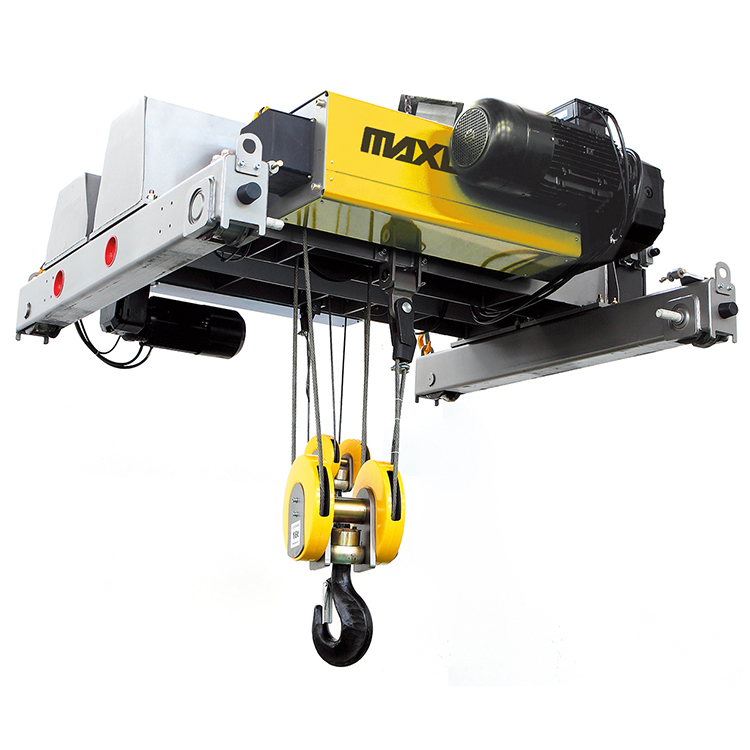
In old factory building renovations or low mezzanine workstations, the top clearance is often very tight. The drum structure of a conventional wire rope hoist occupies more vertical space, and after installation the hook may be only a little over one meter from the ground, so large workpieces simply cannot get in. When selecting for such workstations, the first thing is not to look at the tonnage table, but to measure three dimensions: the clear height from the lower chord of the beam to the ground, the maximum height of the workpiece, and the vertical projection length of the rigging. Subtract the latter two from the first to obtain the maximum vertical space the hoist body is allowed to occupy.
In such scenarios, chain hoists usually have more advantages than wire rope hoists. The drumless design significantly compresses the body height, and at the same tonnage it can gain several tens of centimeters of additional lifting clearance. If even the body thickness of a chain hoist cannot fit, then consider models with a special low-headroom structure, or compact designs in which the trolley and lifting mechanism are arranged with front-to-back offset. Another alternative idea is to offset the hoist's installation position from directly above the workpiece and use inclined pulling or side lifting to avoid the low area, but this introduces eccentric load and swing problems and requires corresponding control measures at the operational level, so it is not suitable for high-frequency workstations.
Control methods and operating details: do not wait until installation to regret it
Finally, it comes down to the operators who deal with the equipment every day. The number and layout of buttons on the control handle may seem like a minor detail, but they directly affect the workstation cycle time and the probability of misoperation. For fixed workstations with only lifting action, a two-button handle is sufficient; for those requiring coordinated trolley traversing, a four-button or six-button handle saves the operator from switching back and forth between the control box and the handle. If the workstation involves precise positioning—such as mold assembly or workpiece slotting—a single-speed hoist relies on inching to fine-tune the position, which is both time-consuming and prone to overshoot. The stability of dual-speed or variable-frequency controlled models in the slow-speed gear reflects value in such workstations far exceeding the increased procurement cost.
There is another selection item that is often overlooked: matching the lifting speed to the workstation cycle time. Lifting speed is not better the faster it is. If the workstation requires high positioning accuracy, an excessively fast lifting speed will force the operator to repeatedly inch and correct, and the actual overall efficiency may instead be lower than that of equipment with moderate speed and smooth start-stop. Conversely, in pure loading and unloading workstations, every second increased in speed can accumulate into a considerable output difference over a shift. Calculate the average single lifting cycle of the workstation and compare it with the hoist's lifting speed parameters; this is more rational than simply pursuing a high configuration.
In the end, selection is answering one question: on this workstation, what will this equipment face every day, what will it endure, what will erode it, and who will operate it. List the answers to these questions clearly, and then look at the parameter table in the catalog—which parameters are truly relevant and which are merely icing on the cake will become clear at a glance. Changing things after the equipment arrives on site costs money and time; thinking one step further during selection saves the downtime ledger for years to come.
 0086 156 1824 5535
 0086 156 1824 5535