Suitable Combinations of Jib Cranes and Electric Hoists
In my years of doing equipment selection in workshops, I've seen far too many cases where a jib crane was installed only to find out it didn't work well. Workers have to turn sideways to dodge the column, the workpiece sways so much during hoisting that it can't be aligned with the hole, or the hook reaches the top, but the workpiece is still stuck inside the equipment and can't get in. These problems are rarely due to poor equipment quality itself—the root cause is usually at the selection stage: treating the jib crane and electric hoist as two independent items purchased separately, only to find they don't match once assembled.
The relationship between a jib crane and an electric hoist is not as simple as "buying an arm and then attaching a hand." The length of the jib determines where the hoist can reach, the cross-sectional height of the jib consumes how much clear height, and the hoist's own weight and width in turn affect the jib's load. They must be viewed as a system, working backward from the actual workstation site to determine the configuration.
Measure the Space First, Then Discuss Tonnage
Many people's first reaction when receiving a requirement is to look at the lifting capacity and ask, "How heavy is the load?" Weight certainly matters, but the first step should be to take a tape measure and measure the workstation front, back, left, and right. The coverage area of a jib crane is a sector; once the column position is fixed, the sector is fixed. If the column is placed in the exact center of the workstation, workers have to walk around the column during operation, which actually reduces efficiency. The reasonable approach is to place the column at the side-rear of the workstation, letting the sector sweep across the material storage area, the equipment operation face, and the finished product staging area, rather than making people accommodate the column.
Clearance height is where things more easily go wrong. The factory building may look tall, but fire pipes, cable trays, and lighting fixtures take up a portion, and the actual usable vertical space may be much less than imagined. The jib crane itself has the height of the jib beam, and the electric hoist hanging under the beam has its own height; the space consumed by these two together must be calculated in advance. If clearance is tight, a low-headroom jib structure can be considered, with the jib beam and hoist trolley laid out compactly in the vertical direction, which can squeeze out two to three hundred millimeters more hook travel than a conventional structure. Don't underestimate this margin—whether the workpiece can smoothly pass over the equipment often depends on exactly this little bit.
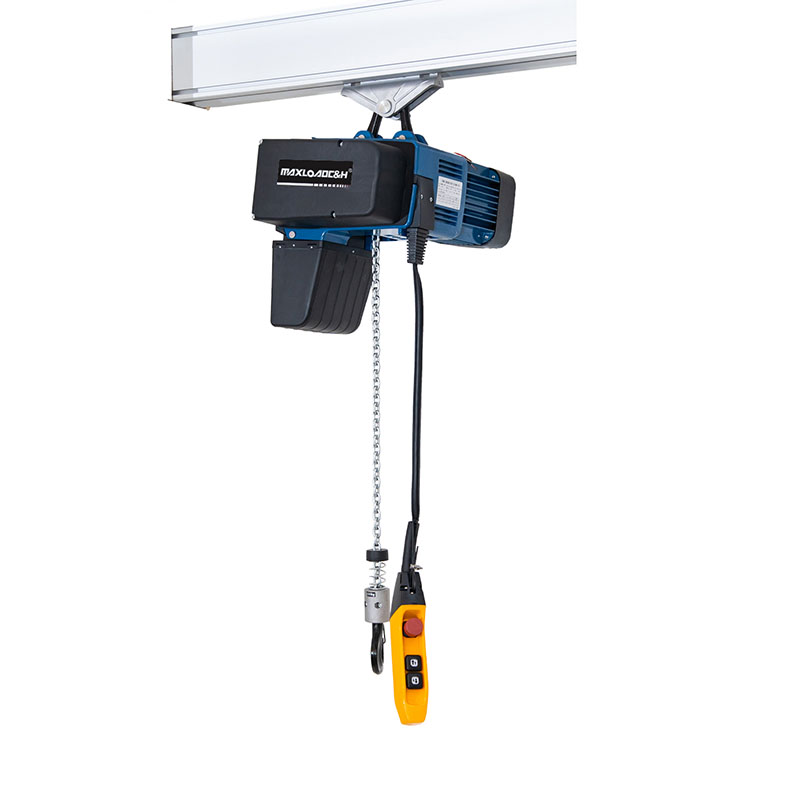
Also measure whether there are fixed obstacles around the workstation. If there are more than two pieces of equipment or columns blocking the jib's slewing range, a straight-arm jib crane will collide when it rotates. In this case, an articulated-arm type is more suitable; the joint can fold to avoid obstacles. Although operation is slightly more complicated, at least it can be used.
Jib Form Follows Installation Conditions
The ground conditions at the workstation directly determine whether a column can be erected. A pillar-mounted jib crane requires an independent concrete foundation—you can't just pick any concrete floor and pour it. The foundation thickness and reinforcement must be calculated according to the equipment load and overturning moment. The floor slab thickness in ordinary workshops is often insufficient and must be excavated and re-poured. If the workstation is next to a load-bearing column or concrete wall of the factory building, a wall-mounted pillar type is a more convenient choice—it doesn't occupy ground passage and doesn't require foundation work. But the wall-mounted type has a limitation: it is close to the wall, so the effective working range of the hoist on the wall side narrows. When selecting the hoist, you need to pay attention to the body width. Wire rope hoists have their drums and motors protruding more to one side, so when close to the wall, the hook may not reach the desired position. In this case, chain hoists are more suitable—the body is narrow, and the blind zone when working close to the wall is small.
If the workstation is not fixed—for example, a maintenance team needs to move back and forth between different equipment—a mobile jib crane with wheels can be pushed around. Although stability is not as good as a fixed type, it has the advantage of flexibility. The trade-off is that the lifting capacity usually cannot be large; above one ton is generally not recommended.
Hoist Selection: Don't Just Look at the Tonnage Label
Electric hoists are divided into wire rope and chain types. In workstation scenarios, chain hoists appear more frequently—not because wire rope hoists are bad, but because chain hoists have a compact body and light dead weight, impose less additional load on the jib, and provide better operating visibility when the hook is close to the workpiece. Wire rope hoists have more advantages when large lifting heights are required or when the tonnage exceeds three tons, but the volume increases and the burden on the jib also increases.
Leaving a margin on lifting capacity is common sense—multiply the workpiece weight by a factor of 1.2 to 1.5—but what's more critical is the correspondence between jib length and lifting capacity. For the same jib crane, the farther the hook is from the column, the smaller the weight that can be safely lifted. The tonnage on the manufacturer's nameplate usually refers to the rated value at the shortest radius; the farthest point of the actual workstation is what's decisive. During selection, the distance to the farthest working point must be reported to the supplier so they can confirm whether the allowable load at that position is sufficient, rather than just looking at an overall tonnage number.
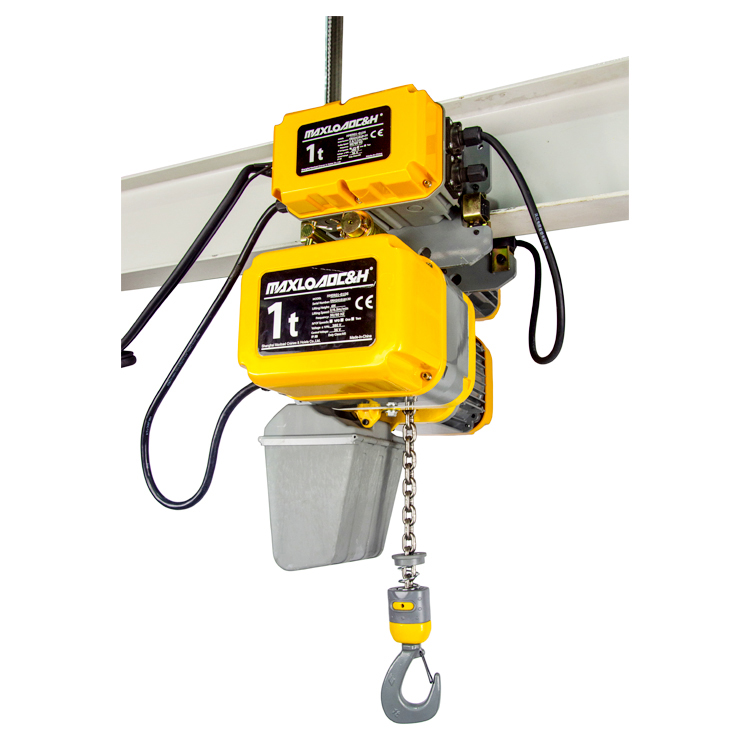
Operating frequency affects the hoist's working class and motor configuration. For workstations that only lift once or twice occasionally, a single-speed hoist is sufficient. But if the assembly line requires lifting every few minutes, the motor frequently starts and stops and heats up; a dual-speed or variable-frequency soft-start model will have a noticeably different service life. The slow speed is used for alignment, and the fast speed for running the empty hook, balancing both efficiency and safety. There is also a point that is easily overlooked: when the jib crane slews, the cable supplying power to the hoist twists along with it. If slewing is frequent, the insulation layer of an ordinary cable will wear through before long. The proper approach is to install a slip ring at the top of the column, so that power and signals are transmitted through the slip ring to the rotating jib, and then along the jib to the hoist. Cheap solutions without a slip ring use spiral cables, which become a hidden danger once slewing frequency is high.
Control Method and Detail Matching
Whether the operating handle is wired or wireless depends on worker habits and workstation layout. A wired handle follows the machine and is simple and reliable, but the cable easily tangles during slewing. Wireless remote control allows workers to stand in a more comfortable position to observe workpiece alignment, which is especially practical in precision assembly situations where both hands are needed to steady the workpiece. If the hoist is equipped with dual-speed or variable frequency, the remote control must have corresponding gear buttons—these must be confirmed at the time of ordering, so you don't discover after installation that the remote only has up and down buttons.
The same applies to the power supply. Whether there is a suitable power point near the workstation, and whether the voltage is 380 or 220, must be confirmed in advance. The electric hoist on a jib crane has low power, but the instantaneous starting current is not low. If it shares a circuit with high-power equipment in the workshop, voltage fluctuations may cause unstable contactor pickup. If conditions permit, pulling a separate circuit from the distribution cabinet is more reliable.
Finally, here's a practical inspection method: before finalizing the contract, have the supplier produce a top view and elevation drawing based on actual workstation dimensions, clearly marking the column position, the jib slewing range, the hook positions at the farthest and nearest points of the hoist, and the highest and lowest hook elevations. Take this drawing to the site, stand on the ground, and gesture it out—see where workers will stand during operation, how the workpiece enters and exits, and whether there is any position where the hook can't reach or where a person has to bend down and crawl in. This drawing is more useful than the parameter tables in any catalog. A jib crane and electric hoist combination—if selected correctly, it's a helper; if selected incorrectly, it's a fixed obstacle that adds trouble for workers every day. Measure the workstation clearly and match the system properly, and only then will it truly save effort after installation.
 0086 156 1824 5535
 0086 156 1824 5535