How Overhead Cranes and Electric Hoists Should Match the On-Site Environment
In factory workshops, the most common mistake in selecting lifting equipment is making decisions by staring at specification sheets. Data such as lifting capacity, span, and height are certainly important, but what truly determines whether a jib crane is easy to use and durable are often the things that are not marked on drawings: whether there is a fire protection pipe next to the column, whether the operator works standing or sitting, how much distance remains between the hook and the tabletop when the hook is lowered to the bottom, and whether dust will clog the brake. A jib crane plus an electric hoist is a combination highly dependent on on-site conditions. Discussing selection apart from the workstation environment will result either in waste from overcapacity or in a semi-finished product that is awkward everywhere.
I. First Determine the Form: Column-Mounted, Wall-Mounted, or Mobile
The installation method of a jib crane directly determines how the workstation is laid out. The column-mounted type is the most versatile. Its base is fixed to the floor, and the jib slews around the column. It is suitable for operations such as machine tool loading and unloading and mold handling that require covering a sector or circular area with the column as the center. Its cost is that the column itself occupies a piece of floor space. If the workstation is next to an aisle or a material staging area, this column may become a long-term obstruction.
The wall-mounted type hangs the jib on a factory building column or load-bearing wall, completely freeing the floor, and is suitable for workstations with narrow aisles or operations against a wall. However, the wall-mounted type is constrained by the wall structure: the height of the jib is locked by the installation point, the slewing angle is usually only about 180 degrees, and not just any wall can support it—it is necessary to confirm whether the wall is a steel structure column or a concrete load-bearing wall; lightweight partition walls are absolutely not acceptable. If the wall conditions above the workstation are unclear, do not force the use of the wall-mounted type.
The mobile jib crane has wheels and is suitable for shared use among multiple workstations or temporary maintenance operations. Its lifting capacity is usually not large. After exceeding one ton, the stability of the mobile type decreases noticeably; it becomes laborious to push, and sway is difficult to control when moving with a suspended load. The prerequisite for choosing the mobile type is that the floor is flat and there are no thresholds or grooves; otherwise, one wheel getting stuck is enough to make people regret it.
There is also a variant that is easily overlooked: the articulated jib type. When there are obstacles at the workstation—such as machine tool protective doors, operating tables, or material racks—and a straight jib cannot swing past them, the multi-joint structure of the articulated jib can bypass the obstacles and deliver the hook to the required position. The cost is lower rigidity than a straight jib, slightly worse positioning accuracy, and more sway during operation. If the workpiece is light and the accuracy requirement is not high, the articulated jib is a reasonable choice; if precision molds are being lifted, it is still more worthwhile to find a way to change the layout.
II. Effective Lifting Height: Do Not Be Fooled by the Term "Lifting Height"
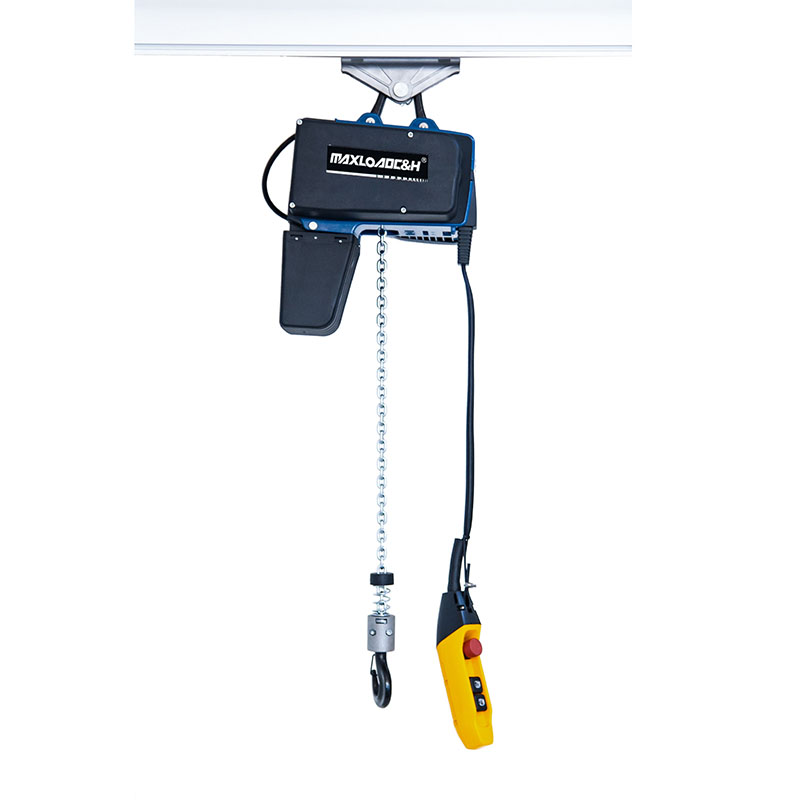
The lifting height in an electric hoist sample refers to the travel of the hook from its highest position to its lowest position. But the question that really needs to be asked at the workstation is: when the hook is lowered to the lowest point, how much distance remains to the floor or the tabletop?
The column of a column-mounted jib crane itself has height; the jib is mounted at the top of the column, and the hoist travels along the lower edge of the jib. The lowest point of the hook is determined by the distance from the lower edge of the jib to the floor minus the height of the hoist body and the height of the hook block. If the workstation is for machine tool loading and unloading, the workpiece is placed on a tabletop, and the tabletop itself is 700 to 800 millimeters high. The hook must be able to lower to near the tabletop to attach the sling. Many selection mistakes occur here: a hoist is configured according to a "lifting height of three meters," but after installation it is found that the hook can only reach as low as 1.2 meters and cannot reach the workpiece on the tabletop.
Conversely, the highest point of the hook must also be sufficient. If the workpiece needs to be lifted out of a material box and then placed onto a machine tool fixture, it may need to pass over a protective door or operating table in between, and the bottom of the workpiece must be higher than the obstacle when the hook is raised to the top. Both of these limit positions must be measured on site with a tape measure before selection, rather than estimated from architectural drawings.
There is another on-site constraint: the clear height above the workstation. The top of the factory building may have crane girders, fire sprinkler pipes, lighting racks, or HVAC ducts. The column height of the jib crane plus the thickness of the jib and hoist must fit into this clear height. When the clear height is insufficient, either the column height must be reduced at the expense of lifting stroke, or the wall-mounted type must be used to install the jib at a lower position; there is no compromise that satisfies both.
III. Lifting Capacity: There Are Two Hidden Accounts Beyond the Rated Value
The weight of the workpiece is the obvious account. The weight of slings, lifting attachments, and fixtures is the second account. The third account is the dynamic load factor: for manually operated jib cranes, the impact load at the instant of lifting can reach 30 to 50 percent of the static weight, especially when the operator is accustomed to quickly jogging the button. If the workpiece weighs 200 kilograms and the lifting attachment weighs 10 kilograms, then multiplied by a dynamic load factor of 1.3, the peak load the hoist actually needs to withstand is close to 273 kilograms. Using it close to the rated value for a long time will noticeably accelerate wear of the brake and gears.
The common practice of leaving margin is to retain 20 to 30 percent margin above the weight of the largest workpiece plus lifting attachment. For a 200-kilogram job, choosing a 250-kilogram or 300-kilogram hoist is more reliable than choosing a 200-kilogram one. This is not for occasional overload, but to leave room for impact and wear in daily operation.
In addition, the rated lifting capacity of the jib crane and the rated lifting capacity of the hoist are two different things. The allowable load at the end of the jib at its longest reach is often lower than the rated value of the hoist itself. A jib crane equipped with a one-ton hoist may only allow 600 kilograms to be lifted at the maximum working radius. What must be confirmed during selection is "how much can be lifted at the radius I need to use," not "what is printed on the hoist."
IV. Slewing and Trolley: Manual or Electric Depends on Frequency and Precision
Whether the slewing of the jib and the travel of the trolley are manual or electric is not divided by lifting capacity, but by operating frequency and positioning requirements.
For maintenance workstations that lift three to five times a day, manual slewing is entirely sufficient. The operator pulls the hook along, stops when it reaches the position, and it is simple and reliable with no risk of electrical failure. But if it is a loading and unloading workstation beside an assembly line, where it must be turned and moved every few minutes, manual operation will not only make the arms sore after a day but also fail to keep up with the takt time. At this point, electric slewing and an electric trolley are worth adopting.
There is also an intermediate option that is often overlooked: manual slewing with an electric trolley. The rotation of the jib relies on human pushing, and the travel of the trolley on the jib is controlled by buttons. This combination is suitable for workstations where the slewing angle is not large, but the hook position on the jib needs to be adjusted frequently. Electrifying the trolley saves the operator from having to reach out and pull the hoist every time, especially when a load is suspended.
For occasions with high precision requirements—such as mold closing and precise part alignment—what is needed is a low-speed gear or variable-frequency control. A single-speed hoist starts lifting at full speed with one press of the button and stops by braking, and the load will sway. A dual-speed or variable-frequency hoist can allow the hook to move at a speed of a few tenths of a meter per minute, which is much more convenient for aligning holes and slots. This configuration is often skipped in ordinary selection tables, but it is essential for precision assembly workstations.
V. Working Class: Light or Heavy Work Depends on Frequency, Not Weight
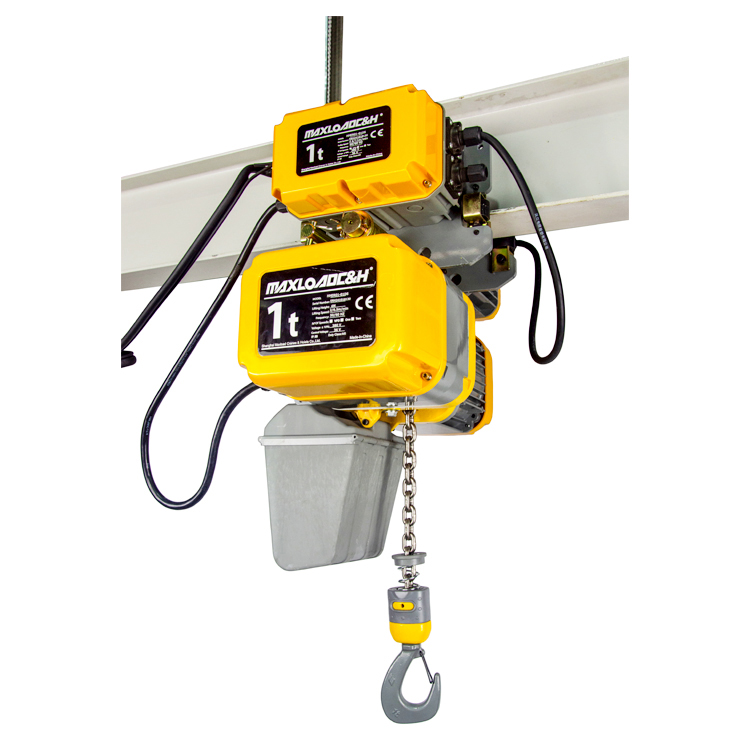
Many people do not understand what the working class of an electric hoist—such as M3, M4, M5—has to do with the workstation. Simply put, it measures how heavy a use intensity the equipment is designed to withstand during its life cycle. An M3-class hoist is designed under the assumption that it works one or two hours a day and is rarely fully loaded; an M5 class assumes that it may run more than four hours a day and frequently approach full load.
If a workstation lifts five times a day for two minutes each time, M3 is sufficient. But if it is also a small part weighing five kilograms, and the assembly line takt requires lifting once every two minutes without stopping all day, the cumulative running time may exceed six hours, and at this time M5 or even higher must be used. Using an M3 hoist for M5 work, even if the rated weight is never exceeded, the wear rate of gears, brakes, wire ropes, or chains will be much faster than the design expectation, and brake slippage or abnormal noise may appear within a year.
The same applies to the slewing mechanism of the jib crane. Rotating dozens of times a day and rotating hundreds of times a day place completely different requirements on the slewing bearing and drive device. When communicating with suppliers, rather than saying "I want a one-ton jib crane," it is better to clearly state "about how many lifts per day, how large an angle each rotation is, and whether it rotates with a load or empty," and let them determine the working class according to the actual use intensity.
VI. Environmental Erosion: Dust, Moisture, and Temperature
The impact of the workstation environment on electric hoists is concentrated on the brake and motor heat dissipation.
At workstations with heavy dust—grinding, casting, and powder feeding—fine dust will penetrate the gap in the brake friction plates, causing braking force to decrease; it will also cake onto the motor heat sink, causing the motor to overheat during frequent lifting. In this case, attention should be paid to the protection class of the hoist. IP54 is the bottom line, and IP65 is better. But a high protection class does not mean maintenance-free. In dusty environments, the brake inspection interval should be shortened by half compared with what is stated in the sample.
For humid or outdoor and semi-outdoor workstations, the concern is corrosion. For ordinarily painted hoists in highly humid environments, brake springs and fasteners may rust within a few months. During selection, the ambient humidity or whether there is a washing operation should be clearly stated, so that the supplier can apply anti-corrosion treatment to the motor and brake parts. Food processing or pharmaceutical workshops also need to consider the impact of washing chemicals on seals; ordinary rubber seals may not be resistant.
In high-temperature environments—such as near heat treatment furnaces or drying lines—the motor temperature rise margin of the electric hoist will be compressed. When the ambient temperature exceeds 40 degrees, the rated lifting capacity of the hoist usually needs to be derated. If the workstation temperature is high for a long time, this derating must be included in the selection, or the hoist installation position should be kept as far from the heat source as possible.
VII. Operation Method and Safety Configuration
Finally, return to the people. Does the operator stand or sit? If operating while seated, is a remote control or a pendant control more convenient? Will the suspended position of the remote control be blocked by the column in terms of signal during slewing? These details seem trivial, but for actions repeated hundreds of times a day, a little awkwardness means long-term efficiency loss.
In terms of safety configuration, overload protection is now standard on electric hoists, but the form of the limit switch is worth noting. The upper limit of the hook is sometimes achieved by a heavy hammer striking a rod, and sometimes by encoder settings. The heavy hammer type has a simple structure, but the heavy hammer guide rail may jam in dusty environments; the encoder type is clean but costs more. The lower limit is more important at workstations that require precise material placement—without a lower limit, the operator must judge by eye how much distance remains between the hook and the tabletop, which is tiring and prone to collision.
The location of the emergency stop button should also be confirmed before installation. The emergency stop of a column-mounted jib crane is usually installed on the electrical box panel on the column. If the workstation is on the other side of the jib and far from the column, the operator cannot reach it, and the emergency stop becomes useless. In this case, consideration can be given to integrating the emergency stop into the control handle or adding a pull-rope switch.
Selecting a jib crane and electric hoist is essentially matching a set of "workstation-specific tools." The parameters in general samples are the starting point, not the answer. Confirm on site the floor conditions at the column position, the highest and lowest points the hook needs to reach, the real number of lifting operations per day, the actual weight of the workpiece plus lifting attachment, and what is floating in the air at the workstation. Then go to the supplier to match the model, and the probability of falling into pitfalls will be much lower. After installation, spending ten minutes a month checking the brake clearance and limit switch action is more cost-effective than repairing after a failure occurs.
 0086 156 1824 5535
 0086 156 1824 5535