Workstation Selection Guide: How to Match the On-Site Environment
Walk around a workshop, and you will most likely see scenes like these: the jib crane is installed, but the operator has to work sideways, with the column pressing into their back; or as soon as the electric hoist starts, the workpiece sways and cannot be aligned with the fixture, requiring repeated jogging. The equipment itself is not broken, and the parameters on the datasheet all meet specifications. The problem is that during selection, only the tonnage was considered, not the workstation.
The combination of a jib crane and an electric hoist is indeed simple in structure—one column, one jib arm, and one hoist. But to make it "handy" at a specific workstation, the site's spatial constraints, load characteristics, and operating rhythm must be broken down and examined separately. Below, we discuss three dimensions: how to measure space, how to calculate load, and how to match the environment.
Measure the Space First, Then Open the Catalog
The first step in selection is not to open the product manual, but to take a tape measure and a laser distance meter and sweep the workstation front, back, left, and right. The choice of jib crane configuration is basically determined by clear height and the distribution of obstacles.
In workshops with a clear height below 3.5 meters, a supported jib crane is more practical than a tie-rod type. The tie-rod type uses channel steel or square tube as a diagonal brace; it is simple in structure and low in cost, but the brace rod takes up space above the jib arm, and the lifting height is reduced by a certain amount. The supported type seats the jib arm on top of the column, with support blocks underneath to bear the load, so height loss is small, giving it an obvious advantage in low-clearance buildings. If the clear height is only just over three meters, attention must also be paid to the body height of the hoist itself—chain hoists are compact in structure and noticeably shorter than wire rope hoists of the same tonnage, and under extreme clear height they are often the only solution.
Longer jib arms are not necessarily better. There is an inverse relationship between arm length and rated capacity: with the same column and slewing system, a 3-meter arm can lift one ton, but stretched to 5 meters it may only lift half a ton. The workstation coverage range must be precise to "the distance from the column center to the farthest lifting point," rather than roughly estimating a circle. Working radii exceeding six meters usually require adding a diagonal brace, and both cost and footprint will increase.
There is another detail that is easily overlooked: when the jib arm rotates, it sweeps a sector, not a line. If there are two or more fixed obstacles around the workstation—such as machine tool columns, material racks, or pipes—a straight-arm jib crane may collide when it rotates. For dense workstations with equipment spacing of less than 1.5 meters, articulated-arm or folding-arm types are more suitable; going around a bend is safer than forcing a direct rotation.
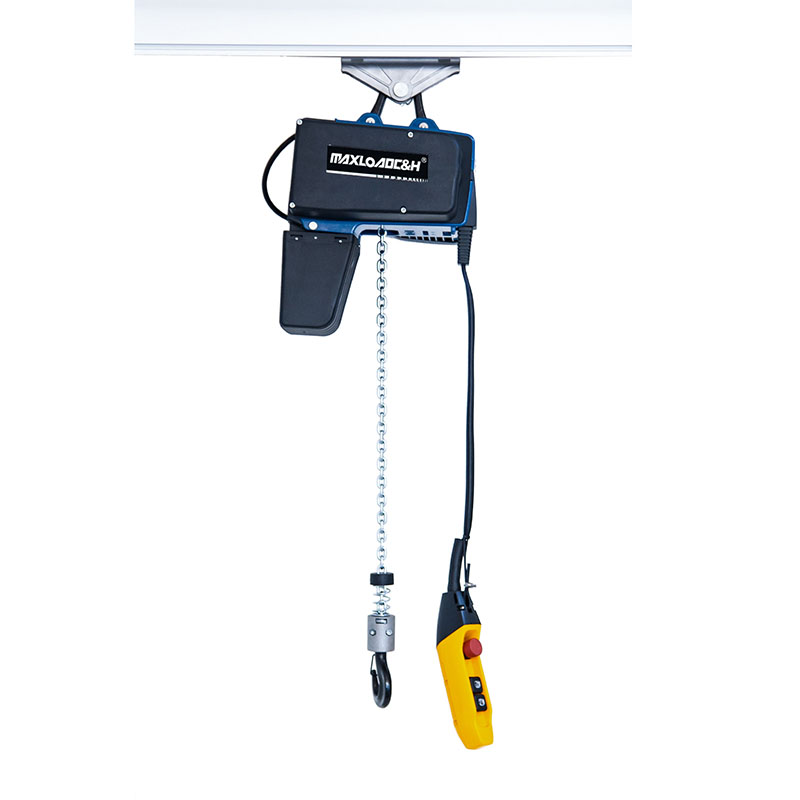
The choice of installation form depends on floor conditions. For central workshop locations with sufficiently thick foundations, the column-mounted type is the most versatile, with 360-degree rotation covering the entire sector. For workstations against a wall or load-bearing column, the wall-mounted type saves the footprint of a column, but the slewing angle is usually only about 180 degrees; if that is enough, there is no need to spend extra on 360 degrees. In old factories where the concrete floor is less than ten centimeters thick, fixing the column with expansion bolts carries risk; either reinforce with a concrete foundation or switch to a mobile type—pushed along on casters, sacrificing some stability for installation flexibility.
Calculate the Load Three Times—Neither Too Little Nor Too Much
Getting the lifting capacity wrong means either being unable to lift or spending money unnecessarily. The first pass calculates the net weight of the workpiece, the second adds the weight of the rigging and fixtures, and the third multiplies by the safety factor. For a 200 kg workpiece and 20 kg rigging, with 30 lifts per day and a factor of 1.2, the actual required lifting capacity for selection is at least 264 kg, rounded up to the 0.5-ton class. Selecting right at the limit is a common mistake: a 0.5-ton hoist lifting 0.48 tons every day will noticeably accelerate wear on the brake and chain.
The working class is more important than many people think. For low-frequency workstations with fewer than ten lifts per day, class A3 is sufficient. For assembly line loading and unloading workstations with dozens or even hundreds of lifts per day, the service life of A5-class hoists and jib crane systems can differ by two to three times. Money spent at the selection stage is more worthwhile than money spent replacing the entire machine two years later.
Lifting height must be worked out backward. At least 0.5 meters of safety margin should be left between the highest hook position and the roof beam, and the lowest hook position must be able to lift the workpiece off the material rack or machine fixture. The formula is not complicated: the required lifting height of the workpiece plus the rigging length plus a 0.3-meter margin, then check against the clear height from the lower chord of the jib beam to the floor. If a low-clearance workstation is equipped with a standard wire rope hoist, there may be a situation where the hoist body hits the jib beam, but the hook still has not risen into position; in that case, switching to a low-clearance type or a chain hoist is the only solution.
The hoist's speed control requirements depend on workpiece characteristics. In scenarios with high positioning accuracy requirements such as precision assembly, mold changing, and battery module handling, a single-speed hoist relies on jogging to make do—the operator gets tired, and the workpiece is prone to bumping. The slow speed of a two-speed or variable-frequency hoist is used for approach and fine adjustment, while the fast speed runs the empty hook, balancing efficiency and positioning accuracy. For ordinary machine loading and unloading, single speed is sufficient.
If the Environment Is Wrong, All Parameters Are Useless
The impact of the workshop environment on selection often only becomes apparent after the equipment is installed. In dusty casting or grinding workstations, the cooling fins and brake gaps of ordinary hoists tend to accumulate dust, and brake failure is not accidental. In humid areas or electroplating and cleaning areas with corrosive gases, the electrical protection rating should start at IP54, and the surface treatment of structural parts must be upgraded accordingly.
Explosion-proof areas are a hard threshold. For workstations with flammable and explosive gases such as painting, electrolyte injection, and formation, the motor, brake, control box, and buttons of the electric hoist must all use flameproof structures, with no exposed contacts. For conventional working conditions, at least Ex d IIB T4 is required; for high-risk gas environments, IIC T4 must be used. The jib crane body must also be matched: rails and structural parts should avoid friction-generated debris, and electrical junction boxes must be sealed properly. Replacing only the hoist with an explosion-proof unit while using ordinary carbon steel for the jib crane will not pass acceptance.
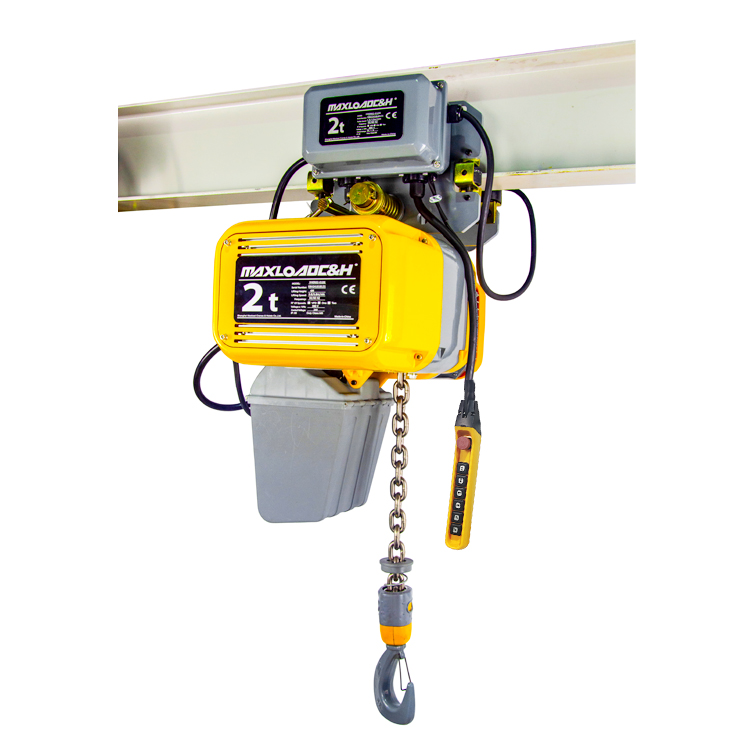
Cleanroom requirements are the opposite: there must be no oil mist precipitation and no metal dust shedding. The rope strands of wire rope hoists inevitably generate particles from friction; chain hoists with special low-volatility lubricating grease are better suited to clean environments. Structural part surfaces should be anodized or powder-coated to reduce dust-collecting dead corners.
For high-temperature workstations—forging, heat treatment, and casting pouring—the hoist's insulation class and heat dissipation capability must be raised by one level. Ordinary motors operating continuously in radiant heat environments quickly exceed winding temperature rise limits. Wire ropes also deteriorate faster in high-temperature areas; in such cases, the chain of a chain hoist is actually more resistant than wire rope.
Let the Person Who Operates It Take a Look
After all the parameters have been calculated, there is still a low-cost but effective method: show the selection plan to the person who actually works at this workstation. Ask them two questions: Can the hook reach the farthest material rack? Will it hit anything when it swings around?
The operator's spatial perception of the workstation is more direct than drawings and tape measures. Whether the column will block the way, whether a handcart can pass when the jib arm swings over, and which side it is convenient to hang the hoist button box on—these details are not written in selection manuals, but they determine whether the equipment is "handy" or merely "usable" after installation.
The selection of a jib crane plus electric hoist is essentially about finding a balance point in limited space that does not feel awkward. If tonnage has margin but the arm length is too ambitious, the equipment sways when it rotates; if the explosion-proof rating is sufficient but the clear height was not measured accurately, the hoist gets stuck against the beam and cannot come down. By going through the three dimensions of space, load, and environment according to actual on-site data, and then having the operator do a hands-on confirmation, most rework and idle equipment can be avoided.
 0086 156 1824 5535
 0086 156 1824 5535