How Do You Size a Jib Crane and Electric Hoist for a Workstation?
The jib crane plus electric hoist combination is the most common thing you'll see on a shop floor — and the easiest to get wrong. The failure mode is rarely "it can't lift the load." It's "it lifts it, but awkwardly": the slew arc is half-blocked by a column, the hoist tops out half a meter short of the height you need, or you've anchored into the slab with expansion bolts, and then the plant announces a floor renovation.
None of this shows up on a quotation. It only surfaces once you bolt the crane to the floor.
So selection shouldn't start with "how many tons." Work backwards from the workstation environment. Here's the sequence as it actually plays out.
Nail Down the Real Working Conditions Before You Pick a Capacity
A lot of bad selections trace back to a single question: "How much does it weigh?"
There are three things you actually need to establish.
One: the weight of the heaviest workpiece — including rigging and fixtures, not the net weight of the part. The mold and die trade gets burned here constantly. A mold body at 1.5 tons, plus lifting plate, shackles, and chain, is nearly two tons in the air.
Two: the travel path. Is the part going from a rack to a machine tool, or across an aisle to the next bay? The first needs maybe 90 degrees of slew. The second may need 180 or a full 360 — or may mean you're looking at the wrong type of crane entirely.
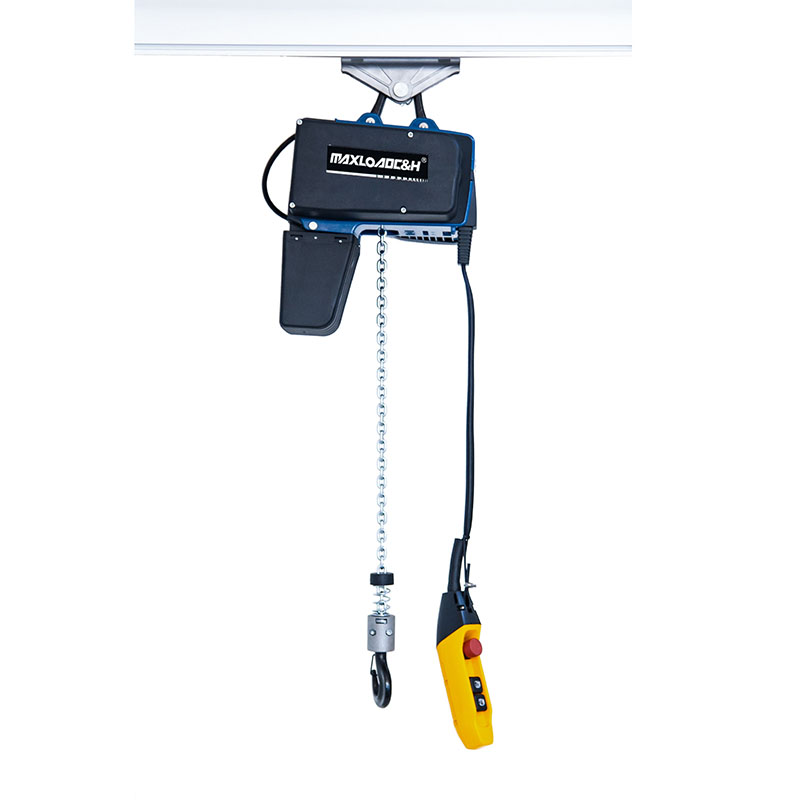
Three: cycle frequency. Ten lifts a day and two hundred lifts a day are two different equipment classes. The hoist's duty class drives the gearbox design, the motor's cooling, and rope life. Put a light-duty hoist on a high-cycle station and in a year or two you'll be forever repairing brakes and limit switches.
The Mounting Configuration Is Decided by the Building, Not the Budget
There are three common ways a jib crane gets mounted. Which one you get depends on what your building can offer.
Pillar-mounted: the crane brings its own column and stands on the floor, independent of the building structure. The upside is placement freedom — put it wherever it's needed. The cost is a solid concrete foundation; cast-in anchor bolts or chemical anchors both work, but the slab's load capacity has to be checked. For greenfield plants laying out workstations, this is the default. The downside is obvious: the column eats floor space, and the crane slews around wherever that column stands, so the workstation layout has to be designed around it.
Wall-mounted: hung off a building column or wall, zero floor footprint. The precondition is that the column can actually carry the load — and that has to be calculated by someone qualified, not eyeballed. Columns in old plants look massive but are often brick-and-masonry; hanging a crane on one is a hazard. Wall mounting suits a row of stations along a wall — an assembly line with evenly spaced columns, one unit hung at each bay. Less floor space and less money than pillars.
Articulated / mobile: an articulated jib uses two folding arm sections to gain height, which suits low-clearance buildings where a straight arm can't reach high enough. A mobile jib sits on a castor-mounted base and suits scattered lift points with no fixed station, but capacities stay small and positioning accuracy is poor — don't expect it to do precision assembly work.
One hard constraint that gets overlooked is headroom. The arm has its own structural depth, and the hook needs a minimum distance at its top position; both come out of your usable lift height. 4.5 meters under the beam does not mean you have 4.5 meters to work with. Before you select anything, measure floor-to-beam underside with a tape and work backwards to see whether the hoist's lift height is enough. Skip this step and it's the most expensive thing you can get wrong.
Slew interference needs to be drawn out in advance too. The jib sweeps a sector, and nothing can be inside it — no columns, piping, overhead crane cabs, or partition walls. Drawing a to-scale circle on paper beats discovering on site that the arm tip is jammed into a duct.
Specifying the Hoist: Four Parameters
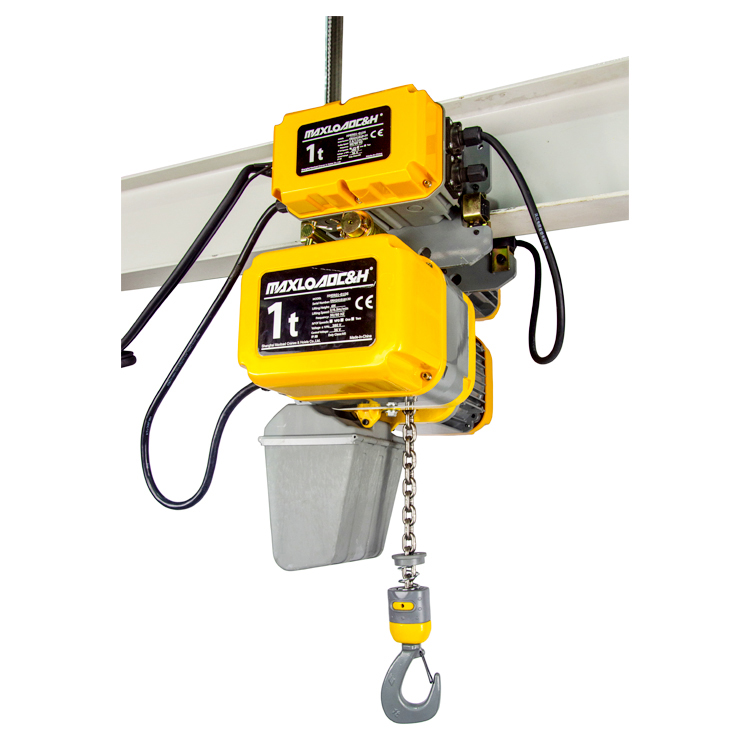
Once the structure is fixed, the hoist comes down to four interlocking parameters.
Rated capacity: take the total weight plus a 10–20% margin. Don't spec right at the limit. Running at the limit means the motor and rope live near full load, and both heat rise and fatigue accelerate.
Lift height: derived backwards from the headroom you measured in step two. Distinguish rope length from usable hook travel — the former is considerably longer.
Lifting speed: single speed, two speed, or variable frequency. For molds and machine-tool loading, where parts must be set down gently, two-speed or VFD is a genuine requirement — the impact of a single-speed hoist hitting bottom is hard on both the part and the operator. For pure transfer work with loose accuracy requirements, single speed is adequate and cheaper.
Travel arrangement: Is the hoist fixed at one point on the arm, or does it ride a powered trolley along the jib? A trolley covers more area, but tip load and beam strength requirements both go up; the structure has to be recalculated. It isn't just a matter of bolting on a trolley.
Also mind the power supply. The hoist is 380 V three-phase; the arm needs a conductor rail or cable reel, and the slew point needs a slip ring or enough cable slack. On retrofits, confirm panel capacity and the tap-in point early — don't find out after delivery that the nearest three-phase supply is thirty meters away.
Safety Equipment Is Not an Option
Limit switches and overload protection should be present in any serious application. If you're running chain-block manual travel or remote control on the operating side, plan for what happens on power loss. Pendant versus remote control also affects both throughput and safety — remote control keeps the operator out from under the load, and with heavy parts that's worth the extra money.
One last reminder: a jib crane is lifting equipment. In China, the unit has to be filed and inspected under the special-equipment regulations, and the installer needs the corresponding license. Don't discover at acceptance time that the paperwork was never done.
Summary
Measure headroom and travel path first, then fix the structural form. Let the building decide pillar, wall, or articulated. Size capacity from total weight plus margin, pick duty class from cycle frequency, derive lift height backwards from clear height — and then get the safety equipment and power provisions right in one pass. In the right order, this stuff is actually easy to select.
 0086 156 1824 5535
 0086 156 1824 5535